Hello, I’m Ethan Cole, a digital media analyst specializing in the culture of online streaming and the business behind internet personalities. Over the past decade, I’ve studied how streaming platforms evolve, how creators choose their tools, and how audiences shape — and are shaped by — the content they consume.
2025 marks a turning point for live streaming. Competition among platforms is more intense than ever, monetization models have shifted, and audiences have become far more selective about quality, format, and interactivity. In this article, I’ll break down the most noteworthy live streaming platforms of 2025, analyze their strengths and weaknesses, and explore the emerging trends shaping the future of real-time content creation. Whether you’re a gamer, educator, entertainer, or brand, this guide will help you choose the right platform for your goals.
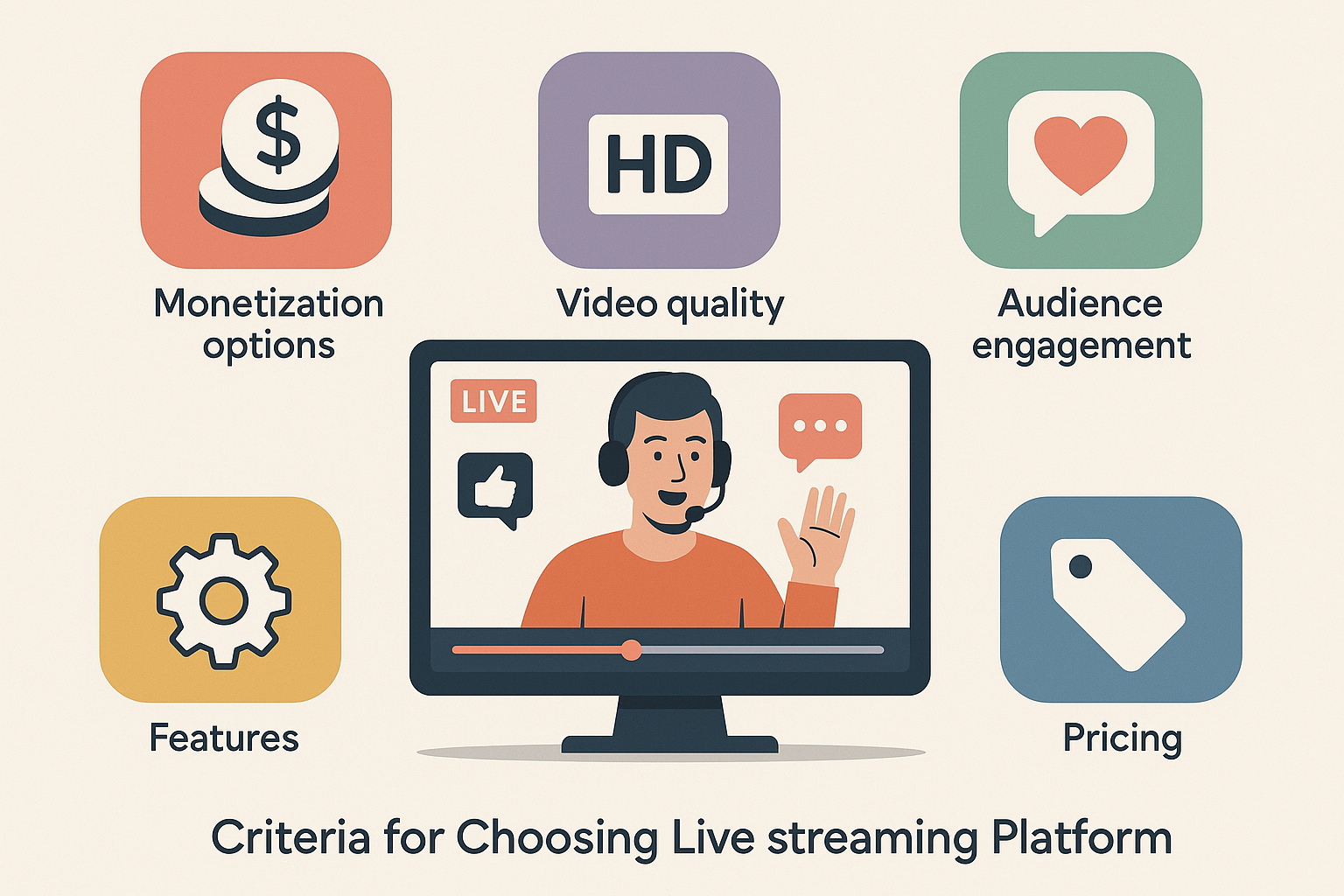
Criteria for Choosing a Live Streaming Platform
Video Quality and Stream Stability
In 2025, audiences expect more than just engaging content — they expect technical perfection. A drop in image quality or an unexpected stream interruption is now seen as a sign of unprofessionalism. That’s why the first thing to evaluate when choosing a platform is the stability and quality of its video delivery.
First, the platform should support high-resolution streaming — at least Full HD, and ideally 4K. For niche projects like esports tournaments or educational courses, 8K formats are already becoming relevant. High clarity must also be paired with adaptive streaming, so viewers with varying internet speeds — especially those on mobile devices — can watch without constant buffering.
Second, stream stability is closely tied to the platform’s server infrastructure. The wider its network of data centers and the smarter its content delivery network (CDN) distribution, the lower the latency and the higher the reliability. This is especially important for broadcasts with an international audience spread across multiple time zones.
Finally, consider how the platform handles peak loads. Leading streaming services in 2025 use dynamic server scaling to handle sudden spikes in viewer numbers without sacrificing quality. This ensures your broadcast will remain smooth and uninterrupted, even if it unexpectedly goes viral.
Monetization Opportunities
In 2025, choosing a platform is directly tied to how it enables you to earn from your content. Even if streaming starts as a hobby, the monetization model ultimately determines whether you can turn your broadcasts into a sustainable source of income.
First, consider the revenue share offered to creators. Among market leaders, this can range from 50% to 95% depending on the income stream — whether it’s subscriptions, donations, advertising, or digital product sales. The higher the creator’s share, the faster your investment in time and equipment pays off.
Equally important is the variety of monetization methods. Modern platforms offer multiple revenue channels at once: recurring subscriptions, one-time donations, built-in ad integrations, live merchandise sales, and affiliate programs. This diversity reduces dependency on a single source of income and makes earnings more stable over time.
Another factor is the accessibility of monetization for newcomers. Some services impose strict entry thresholds — such as a minimum follower count or streaming hours — before allowing creators to earn. Others provide access to basic monetization tools from day one, encouraging beginners to grow their channels faster.
Ultimately, the wider the range of tools and the clearer the payout terms, the more attractive the platform becomes for long-term work.
Audience and Geography
In 2025, a streaming platform is not just a technical tool — it’s also a ready-made audience you gain access to. The better you understand the service’s demographics, the more precisely you can shape your content and marketing strategy.
First, assess the size and activity level of the user base. Large platforms with millions of viewers offer broader reach but also come with higher competition. Niche platforms, on the other hand, may have smaller audiences, yet they’re often more loyal and engaged.
Second, geography matters. If your content targets Russian-speaking viewers, it makes sense to choose services with a strong presence in CIS countries. For a global audience, opt for platforms with robust international server infrastructure and localized interfaces.
Third, analyze the audience’s age and interests. Younger viewers tend to watch gaming streams on Twitch and TikTok Live, while older audiences gravitate toward YouTube Live or LinkedIn Live for educational and business-focused broadcasts.
Choosing a platform with the right audience and geographic reach not only boosts your channel’s growth potential but also directly impacts engagement and revenue.
Audience Interaction Tools
By 2025, simply going live is no longer enough to keep viewers engaged. A streamer’s success increasingly depends on how actively they interact with their audience during broadcasts. That’s why it’s critical to evaluate the platform’s built-in tools for communication and engagement.
First, the baseline is chat functionality. It should be fast, real-time, and equipped with moderation tools, including the ability to assign moderators and apply filters to block spam. The more intuitive and responsive the chat, the easier it is to maintain a lively dialogue with viewers.
Second, interactive features are becoming essential. Polls, surveys, real-time reactions, and mini-games make viewers feel like active participants rather than passive spectators. Some platforms even allow integration with third-party apps to customize the viewing experience further.
Third, paid interactions — such as highlighted messages, stickers, and virtual gifts — are growing in popularity. They not only strengthen emotional connections with fans but also serve as an additional revenue stream.
Finally, integration with social networks and messaging apps is crucial. The ability to send clips, stream notifications, or announcements to other channels helps expand your reach and bring viewers back to your broadcasts.
The richer and more flexible the interaction toolkit, the higher the audience engagement — and, ultimately, the greater the long-term success of your channel.
Support for External Hardware and Software
For modern streamers, it’s essential that a platform works seamlessly with professional equipment and popular broadcasting software. This directly affects whether a creator can deliver all planned visual and audio enhancements without technical limitations.
A good service should integrate effortlessly with OBS Studio, Streamlabs, XSplit, and other tools. Easy setup, proper transfer of overlays, animations, and interactive elements can significantly simplify broadcast preparation.
Equally important is compatibility with cameras, audio interfaces, microphones, and studio lighting. Support for professional-grade gear eliminates audio-video sync issues, minimizes latency, and ensures a clean, high-quality image.
For high-bitrate streams, hardware encoders and capture cards are especially valuable. They offload processing from the main system and maintain stable quality, even for 4K or 8K streams packed with complex graphics.
It’s also worth considering mobile connectivity. Some platforms allow direct use of external microphones and cameras with a smartphone, making it possible to stream in high quality from virtually anywhere.
The broader the range of supported devices and software, the more creative freedom a streamer has to execute their vision and scale their projects.
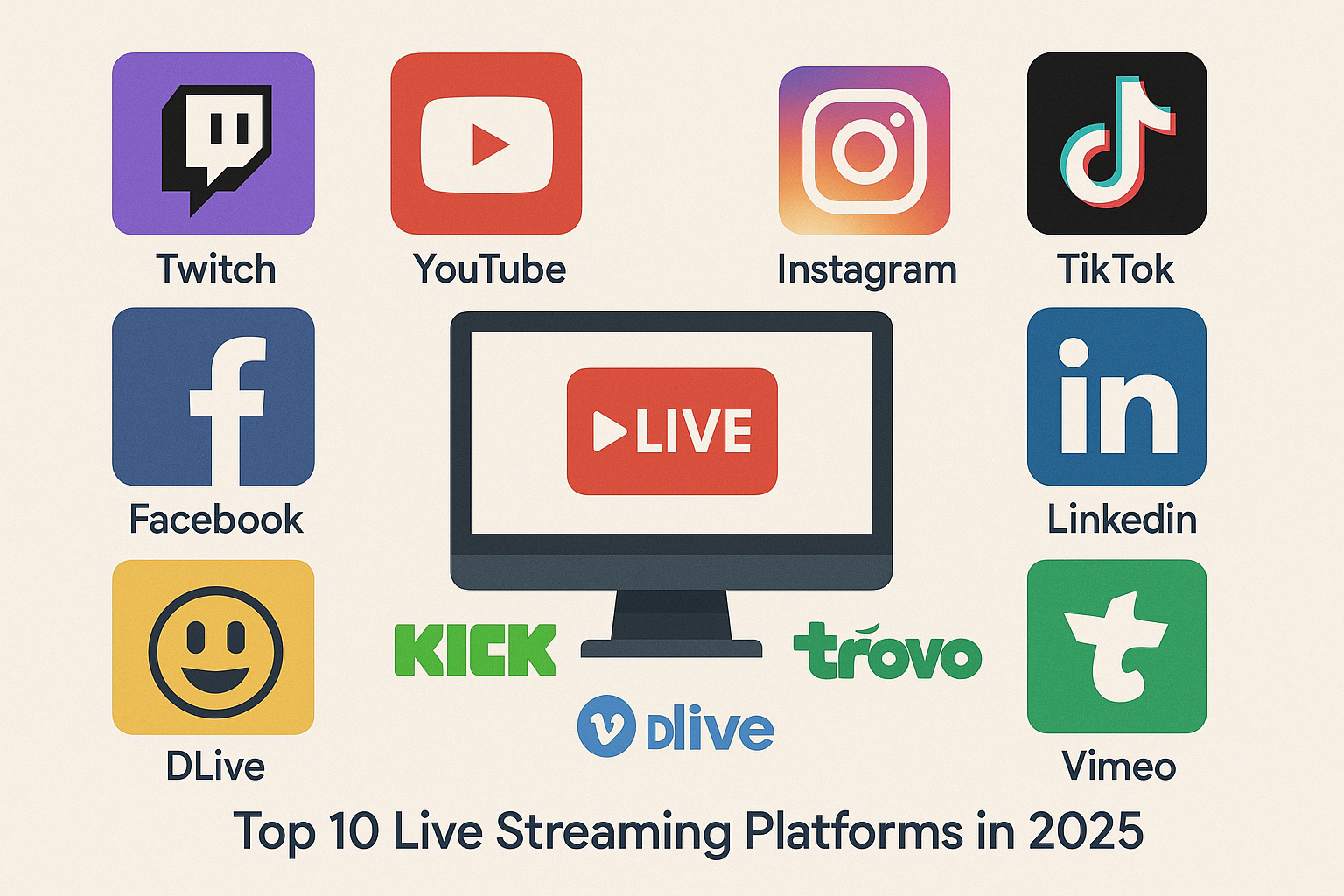
Top 10 Live Streaming Platforms in 2025
Twitch
Twitch remains a dominant force in the gaming livestream space and continues to strengthen its position through expanded functionality. The platform has been actively rolling out new interactive features, including enhanced chat reactions, voice-based polls, and integration with in-game events.
In 2025, Twitch updated its monetization policies, increasing the revenue share for creators who meet specific activity benchmarks. This shift has made the platform even more appealing to professional streamers and esports content creators.
On the technical side, Twitch introduced adaptive 4K streaming support, improved integration with OBS and other third-party broadcasting tools, and optimized its server infrastructure. These upgrades have reduced latency and improved stream stability during high-traffic events.
Beyond gaming, Twitch is steadily expanding into IRL streams, podcasts, and educational broadcasts. This diversification not only broadens the audience but also gives creators more room to carve out unique niches within the platform.
YouTube Live
YouTube Live has firmly established itself as a versatile platform for live broadcasting, suitable for gaming, educational, and entertainment content alike. Thanks to its deep integration with the broader YouTube ecosystem, creators gain access to a powerful recommendation engine and an existing subscriber base.
In 2025, YouTube Live enhanced its analytics tools, providing streamers with real-time, detailed data on engagement, viewer retention, and donation performance. This enables creators to fine-tune their delivery and adapt content to audience behavior on the fly.
From a technical perspective, the platform now supports 4K HDR streaming with minimal latency and improved adaptive bitrate functionality, ensuring stable playback even with fluctuating internet speeds.
Monetization is equally flexible, with multiple channels available: Super Chats, channel memberships, integrated ads, and product sales through YouTube Shopping integration. This multi-stream revenue model helps reduce reliance on a single income source.
Additionally, YouTube Live has rolled out AI-powered moderation, which automatically filters spam and unwanted messages in the chat — improving the experience for both viewers and broadcasters.
Kick
Kick has quickly secured a notable position in the streaming market, largely thanks to its generous revenue-sharing policy. The platform offers creators up to 95% of subscription income — one of the highest rates in the industry. This approach immediately attracted both newcomers and experienced streamers looking for more favorable terms.
Kick’s functionality is designed for simplicity and speed of going live. Its interface is streamlined, yet it still supports integration with OBS, Streamlabs, and other popular broadcasting tools, making it easy for creators to transfer their existing workflows from other platforms.
In terms of audience, most activity is centered around gaming streams and IRL content. However, the platform is actively expanding into esports by organizing tournaments and partnering with well-known teams.
Technically, Kick delivers stable high-quality streaming, including 4K broadcasts. Its server infrastructure scales dynamically under load, reducing the risk of downtime even during sudden spikes in viewership.
Unlike many competitors, the platform takes a minimal-content-censorship approach — a policy that both attracts creators and carries certain reputational risks. For some streamers, this freedom is the deciding factor in choosing Kick.
Facebook Gaming
Facebook Gaming remains a significant player in the live streaming segment, particularly for creators focusing on mobile games and casual content. Its key advantage is direct integration with the Facebook social network, allowing streamers to tap into their existing audience and send targeted notifications when going live.
In 2025, the platform introduced a redesigned interface that simplifies stream navigation and improves viewer retention. Expanded multi-streaming capabilities now allow creators to broadcast simultaneously to Facebook and other platforms without extra hassle.
Monetization options include donations, subscriptions, in-stream ads, and the “Stars” system — Facebook’s internal currency that viewers can send to creators. This variety of tools helps ensure a more stable and diversified income stream.
On the technical side, Facebook Gaming has improved high-resolution stream support and optimized data delivery for mobile devices. The platform is also adapting actively to vertical streaming formats, making it especially convenient for mobile-focused content.
Thanks to deep integration with the Meta ecosystem, Facebook Gaming provides creators with advanced audience interaction analytics and the ability to promote streams through Facebook’s ad manager. This makes it an attractive choice for those looking to rapidly grow their audience through paid promotion.
Trovo
Trovo is steadily strengthening its position as an international alternative to Twitch, maintaining a strong focus on gaming while actively expanding into educational and creative live streams. Owned by Tencent, the platform benefits from significant financial and technical backing, as well as privileged access to Asian markets.
One of Trovo’s key advantages is its streamer support program, which offers bonuses for meeting monthly goals in views and audience engagement. This incentivizes creators to stream regularly and maintain high content quality.
From a technical standpoint, Trovo delivers stable broadcasting with 4K support and low latency. Integration with OBS, Streamlabs, and XSplit is straightforward, making migration from other platforms simple.
Monetization options include subscriptions, donations, “Elixir” (its internal currency), and affiliate programs. Flexible terms and access to performance bonuses make the platform appealing to both newcomers and seasoned professionals.
Community development is another area where Trovo excels. The platform offers clan and group features, enabling viewers and creators to connect, host events, and build a loyal core audience.
TikTok Live
TikTok Live dominates the vertical streaming niche, catering to mobile-first audiences. Its recommendation algorithms help creators rapidly reach new viewers, making it particularly attractive for those just starting their live streaming careers.
In 2025, TikTok Live introduced enhanced interactivity features: co-streaming with other creators, quick challenges, donation service integrations, and gamified audience engagement tools. These elements boost watch time and viewer participation.
Streaming quality automatically adapts to connection speed, ensuring stable playback even on less-than-ideal networks. Support for external microphones and cameras on mobile devices enables professional-grade broadcasts without a full studio setup.
Monetization is built around virtual gifts purchased with real currency, as well as branded integrations facilitated through the TikTok Creator Marketplace.
A notable advantage is the ability to repurpose live streams into short clips, which continue to attract views long after the broadcast ends. This format helps creators generate additional traffic and maintain audience interest between live sessions.
Instagram Live
Instagram Live remains a go-to tool for influencers, brands, and experts building their audiences within the Meta ecosystem. Its main strength lies in instant access to an existing follower base and the ability to start a broadcast effortlessly from the mobile app.
Recent updates introduced multi-guest streaming, enabling creators to host interviews, panel discussions, and interactive shows. Integration with Reels allows stream recordings to be saved and repurposed into short videos for ongoing promotion.
For mobile streaming, both video and audio quality are consistently high, and support for external microphones and accessories elevates production value. Viewers can interact via chat, send reactions, and submit questions, while hosts can pin comments to highlight key moments.
Monetization comes through “badges” and virtual gifts, as well as direct brand partnerships. This approach works especially well in niches centered on personal branding and real-time audience engagement.
Instagram Live also leverages its recommendation algorithms to extend reach beyond a creator’s current followers, making it an effective choice for those aiming to scale their presence quickly.
X (Twitter) Live
X (formerly Twitter) Live has carved out its niche as a platform for real-time news coverage, live events, and interactive discussions. Its main advantage lies in the instant distribution of broadcasts through followers’ feeds and recommendation algorithms — a major asset for event-based and journalistic content.
The service supports both mobile and desktop streaming, with professional broadcasting software integration enabling high-quality audio and video. Low latency makes it ideal for interviews, press conferences, and live debates.
In 2025, X expanded its monetization options, introducing creator subscriptions, pay-per-view access for select broadcasts, and donation integration via third-party services. This toolkit suits both independent creators and media organizations.
For audience engagement, X Live offers built-in polls, threaded comment discussions during broadcasts, and the ability to instantly share clips from the stream. These features help sustain attention and encourage active, real-time conversation.
X Live holds a particularly strong position in political, sports, and news streaming — sectors where speed of distribution and broad reach are critical.
DLive
DLive stands out from competitors with its decentralized model and use of blockchain technology. This approach allows creators to maintain full control over their content and receive earnings directly, without heavy intermediary commissions.
The platform operates on a tokenized economy, where viewers reward streamers with cryptocurrency or platform-native tokens. These can be converted into real money or used within the ecosystem, making DLive especially attractive to creators seeking financial independence and transparency.
From a technical perspective, DLive supports high-resolution, low-latency broadcasts and integrates smoothly with OBS, Streamlabs, and hardware encoders. This flexibility accommodates both hobbyist setups and professional studios.
Monetization includes donations, subscriptions, sponsorships, and revenue sharing from advertising partnerships. Unlike traditional platforms, DLive charges minimal fees, allowing streamers to keep more of their earnings.
The DLive community is notably engaged, with viewers also earning rewards for watching, commenting, and promoting streams. This incentive structure fosters organic growth and builds a loyal, core audience.
LinkedIn Live
LinkedIn Live is focused on professional and business-oriented broadcasts, occupying a unique niche among streaming platforms. Its primary emphasis is on B2B content, webinars, training sessions, and product launches.
The platform’s biggest strength is access to LinkedIn’s vast audience — over 900 million registered users, many of whom are professionals, entrepreneurs, and corporate decision-makers. This makes it an ideal space for building a personal brand or promoting a company within a business context.
Features include integration with popular streaming software, multi-camera support, and screen sharing capabilities, enabling professional presentations, training, and interviews without the need for additional tools.
Monetization is indirect: LinkedIn Live does not offer direct payouts, but its streams are often used to generate leads, promote services, or deliver exclusive training programs — a model that can be more profitable for businesses than donations or subscriptions.
Video quality is consistently high, and its server infrastructure is optimized for a global audience. An added advantage is integration with LinkedIn’s advertising tools, allowing targeted promotion of upcoming broadcasts to precisely defined audiences.
Comparative Table of Platforms
| Platform | Main Focus / Niche | Monetization Options | Technical Features | Audience & Reach | Unique Advantages |
|---|---|---|---|---|---|
| Twitch | Gaming, esports, IRL | Subscriptions, donations, ads, merch sales | Adaptive 4K streaming, OBS integration, optimized CDN | Global, strong gaming community | Deep community culture, esports partnerships, expanding into podcasts and education |
| YouTube Live | Universal (gaming, education, entertainment) | Super Chats, memberships, ads, YouTube Shopping | 4K HDR, low latency, adaptive bitrate | Massive global audience, strong discovery tools | Powerful recommendation algorithm, AI chat moderation |
| Kick | Gaming, IRL | Up to 95% subscription revenue share, donations | 4K streaming, scalable servers, OBS integration | Growing global base | Minimal content restrictions, fast monetization access |
| Facebook Gaming | Mobile gaming, casual content | Donations, subscriptions, ads, “Stars” currency | High-res streaming, vertical format support, mobile optimization | Integrated with Facebook social network | Targeted stream promotion via Meta Ads |
| Trovo | Gaming, creative, educational | Subscriptions, donations, “Elixir” currency, bonuses | 4K streaming, low latency, OBS/Streamlabs/XSplit integration | Global, strong in Asia | Streamer bonus program, clan/community features |
| TikTok Live | Vertical mobile streaming | Virtual gifts, brand integrations via Creator Marketplace | Adaptive quality, external device support | Massive mobile-first audience | Fast audience growth via algorithm, clip conversion after streams |
| Instagram Live | Personal branding, lifestyle, brand content | Badges, virtual gifts, brand partnerships | High mobile quality, external mic support, integration with Reels | Followers within Meta ecosystem, discoverable beyond | Instant access to followers, multi-guest streams |
| X (Twitter) Live | News, events, real-time discussions | Subscriptions, pay-per-view, donations | Low-latency streaming, pro software integration | Real-time social network reach | Instant broadcast distribution, strong in politics/news/sports |
| DLive | Decentralized streaming, blockchain | Crypto donations, subscriptions, token economy, sponsorships | High-res, low latency, OBS/hardware encoder support | Niche blockchain audience | Minimal fees, financial independence for creators |
| LinkedIn Live | Professional, B2B | Indirect monetization via leads, service promotion | Multi-camera, screen sharing, pro software integration | Over 900M professionals | Business-focused audience, ideal for corporate branding |
How to Choose a Platform for Your Content
For Gamers
Choosing a platform for gaming streams comes down to several key factors: audience, technical capabilities, and monetization terms. For gamers, it’s important to stream on a service with an active gaming community and a high percentage of viewers specifically interested in game-related content.
Twitch remains the primary hub for gaming creators thanks to its massive viewer base, integrations with gaming services, and advanced interactivity tools. It’s the easiest place to find an audience for a specific game, genre, or tournament.
For those looking to gain additional traffic from search and recommendations, YouTube Live is an excellent choice. The platform indexes both live streams and their recordings, meaning broadcasts can continue to attract views long after they’ve ended.
Kick appeals to gamers with its high subscription revenue share and relatively low competition. It’s a strong option for creators aiming to establish themselves quickly in a growing segment.
If your target audience is primarily in Asia, Trovo is worth considering. It actively promotes esports and offers streamer bonuses for meeting activity goals.
Ultimately, gamers should choose a platform based on a mix of reach, audience engagement tools, and profitability, ensuring it aligns with their genre and long-term strategy.
For Educational Projects
For creators producing educational content, it’s crucial to choose a platform that delivers high-quality streaming, convenient tools for presenting materials, and access to the right audience. Key factors include broadcast stability, the ability to share presentations, documents, or your screen, and the option to record and archive streams.
YouTube Live is suitable for most educational formats thanks to its ability to save broadcasts as videos that are easily searchable. The platform also supports high-resolution streaming and subtitles, including automated caption generation.
LinkedIn Live is the optimal choice for professional webinars and training sessions. Its audience consists mainly of specialists and entrepreneurs, increasing the value of each viewer. Integration with company pages and promotional tools makes it easier to attract people who are genuinely interested in the topic.
While Facebook Gaming isn’t relevant here, Facebook Live can be effective for local or niche communities — especially if you already have an active group. It offers easy mobile access and the ability to schedule broadcasts in advance.
It’s also worth considering services like Zoom or Microsoft Teams for private or paid sessions, using them alongside public streams on YouTube or LinkedIn to attract new audiences.
For Business and Marketing
In the commercial segment, a live streaming platform must offer not only stable broadcasting but also integration with marketing and sales tools. The ability to engage with a target audience in real time and quickly convert interest into purchases or inquiries is crucial.
LinkedIn Live is highly effective for B2B communications, product launches, and industry events. Its audience is composed of professionals and executives, making it easier to reach decision-makers. The ability to target announcements through LinkedIn Ads significantly increases the effectiveness of marketing campaigns.
YouTube Live works well for brands in both B2B and B2C sectors. The platform provides broad audience reach, allows broadcasts to be archived for later use, and integrates seamlessly into advertising strategies through Google Ads.
Instagram Live excels in niches where visual appeal and emotional engagement are key — such as fashion, beauty, dining, and events. It offers direct access to followers and promotes broadcasts organically in feeds and recommendations.
Facebook Live remains relevant for local businesses and niche communities. It allows easy setup of live streams with the option to promote recorded broadcasts via paid ads targeted to specific regions or interest groups.
For Creative Content and Blogging
Creators producing non-traditional content — from lifestyle vlogs to art projects and musical performances — need a platform that provides wide reach, flexible presentation formats, and strong interactive tools.
Instagram Live is ideal for bloggers and creators whose audiences already actively engage with content on social media. Broadcasts can be easily integrated into Stories, and recordings can be repurposed into Reels to continue drawing attention after the stream ends.
TikTok Live offers rapid audience growth through recommendations and viral sharing. It’s especially effective for creative content that works well in vertical format.
YouTube Live is a great choice for projects where image quality, long broadcast duration, and the ability to create entire playlists of recorded streams matter. It’s perfect for creative workshops, interviews, or live concerts.
Twitch, while primarily known for gaming, has significantly expanded its IRL category in recent years. This includes art streams, podcasts, cooking shows, and other formats that thrive on an engaged community.
The choice ultimately depends on whether the creator prioritizes rapid growth through algorithms (TikTok, Instagram) or long-term content accumulation with organic search traffic (YouTube, Twitch).
Live Streaming Trends in 2025
AI Moderation and Automatic Subtitles
Artificial intelligence is becoming increasingly integrated into streaming platforms, and one of the most significant areas of adoption is real-time chat moderation and subtitle generation.
AI moderation filters spam, offensive messages, and unwanted content instantly, reducing the workload for streamers and human moderators. These algorithms analyze context rather than relying solely on keywords, which lowers the risk of false bans. Some platforms, like YouTube Live and Twitch, now offer adjustable moderation levels, allowing creators to tailor chat rules for their specific audience.
Automatic subtitles serve two major purposes: they make broadcasts accessible to viewers with hearing impairments and help those watching without sound. Modern speech recognition systems deliver high accuracy even with imperfect acoustics or the host’s accent.
Additionally, AI tools are beginning to support automatic subtitle translation into other languages, opening the door to audiences far beyond a single country. For creators, this means the language barrier is no longer a limitation; for viewers, it makes content truly global.
Multistreaming
Multistreaming is a strategy where the same live broadcast is streamed simultaneously to multiple platforms. For streamers, it’s a way to expand reach, test different audiences, and quickly identify where content gets the strongest response.
Technically, this is done via specialized services like Restream or StreamYard, or through built-in features on some platforms. These solutions allow you to broadcast to YouTube, Twitch, and Facebook at the same time without overloading your hardware.
The main advantage is increased visibility — viewers can watch you on their preferred platform without switching apps. Broadcast recordings are also saved on each channel, boosting the chance of additional traffic from search and recommendations.
However, multistreaming requires awareness of each platform’s rules. Some services, like Twitch for partners, limit simultaneous streaming to competing platforms. It’s also important to manage chats effectively so audience interaction stays lively, even when viewers are spread across different sites.
For creators, multistreaming is a tool for accelerated growth, but it works best when it’s part of a broader strategy — with clear goals for each platform rather than as a replacement for a focused content plan.
Interactive Formats
Interactivity is no longer just an add-on to a live stream — in 2025, it has become one of the key factors in keeping viewers engaged. The more actively the audience participates, the longer they stay and the deeper their involvement becomes.
First, direct participation mechanics are gaining popularity: polls, surveys, quizzes, and real-time mini-games. These create a sense of shared experience, turning viewers from passive observers into active participants.
Second, platforms are introducing customization tools. Viewers can influence the course of the stream — choosing topics, challenges, or even elements of the content such as music or stage design. This strengthens the emotional connection between the creator and the audience.
In addition, integrations with external services are emerging, enabling more complex interactive scenarios: from co-op quest completions to controlling stream elements via chat commands.
As a result, interactive formats are no longer a niche tool — they’ve become an essential component of a competitive channel, especially in entertainment, gaming, and lifestyle content.
Virtual and Augmented Reality
VR and AR are no longer seen as experimental technologies — they are becoming an integral part of live streaming. Platforms are actively adding tools that allow creators to integrate virtual elements directly into broadcasts, creating a true sense of presence.
Virtual Reality (VR) allows viewers to immerse themselves in a fully digital environment. It is especially valuable in gaming streams, virtual tours, educational simulations, and esports events. Modern headsets deliver high resolution and minimal latency, making the experience more realistic.
Augmented Reality (AR) is used to overlay interactive elements onto the real-world scene. These can include 3D models, graphics, animations, or interactive objects that respond to both the streamer’s and the viewers’ actions.
Transitioning to VR and AR formats requires more powerful equipment and experience with specialized software. However, the benefits are clear: such broadcasts stand out from competitors, evoke stronger emotions, and keep viewers’ attention longer.
For creators, VR and AR represent a way to break out of traditional formats and offer audiences an experience they simply can’t get from conventional streaming.
Conclusion
As a digital media analyst, I’ve watched live streaming evolve from a niche hobby into a multi-billion-dollar industry — and in 2025, the pace of change has only accelerated. The platforms leading the market today aren’t just competing on video quality or monetization rates; they’re competing on community culture, creator tools, and the ability to connect audiences across formats, devices, and borders.
Choosing the right platform has never been more strategic. For gamers, it’s about where the most engaged communities live. For educators, it’s about accessibility, stability, and the right audience. For brands, it’s about turning live engagement into measurable business outcomes. And for creators in lifestyle, art, and entertainment, it’s about standing out with interactive, immersive experiences that keep audiences coming back.
The trends shaping this industry — AI-powered moderation, automatic translations, multistreaming, interactivity, VR and AR — are no longer optional. They’re the baseline for competitive growth. In my view, the winners in this space will be those who adapt early, master the tools, and think beyond the platform itself — treating streaming not just as content delivery, but as a dynamic, evolving relationship with their audience.
In short: the technology will keep advancing, the audience will keep demanding more, and the most successful creators will be those who see every broadcast as both a performance and a partnership.