
My name is Ethan Cole, and I’ve spent over a decade analyzing the collision between politics, entertainment, and digital culture. Few figures embody that collision as vividly as Hasan Piker. Known to millions as HasanAbi, he’s not just a Twitch streamer — he’s a polarizing force. Loved by his loyal followers and despised by critics, Piker blends sharp political commentary with a flair for provocation. In this article, we’ll break down his most controversial moments, the scandals that made headlines, and why he continues to thrive in an industry where one bad stream can destroy a career.
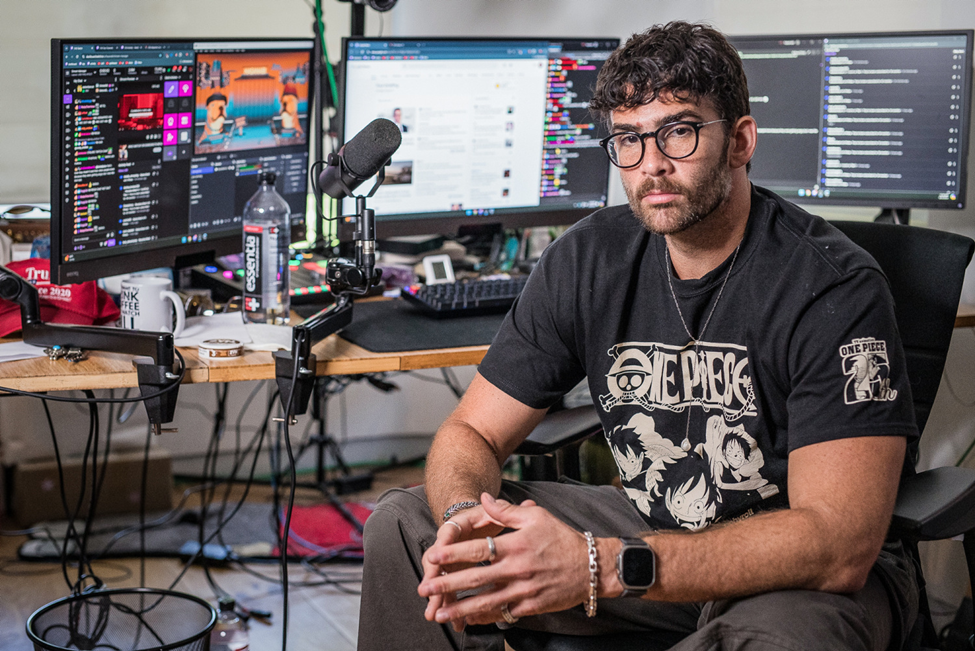
From New Jersey to the Global Stage
Early Life and Background
Hasan Doğan Piker was born on July 25, 1991, in New Brunswick, New Jersey, to Turkish immigrant parents. He spent most of his childhood in Istanbul, growing up in a Muslim household and navigating the contrasts between traditional values and a rapidly modernizing world. From an early age, he stood out for asking uncomfortable questions — a trait that often made him a target for bullying during his school years.
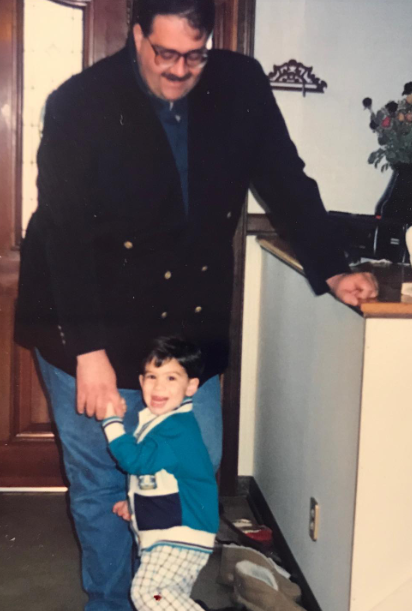

His father built a career in political science and economics, while his mother dedicated herself to art and architectural history. The family’s intellectual environment, combined with his uncle’s role as a prominent progressive media figure, exposed Hasan to politics and public discourse long before he ever stepped in front of a camera.
Education and First Steps in Media
Hasan Piker began his studies at the University of Miami but later transferred to Rutgers University, where he graduated cum laude in 2013 with degrees in Political Science and Communication Studies. During his final year, he secured an internship at The Young Turks, a progressive media network co-founded by his uncle. After graduating, he joined the company full-time in the ad sales and business department, but his career quickly shifted when he stepped in as a replacement host. That moment opened the door to an on-camera role, eventually leading him to host and produce his own political commentary series, The Breakdown, in 2016. Around the same time, he also contributed political content to major online publications, further building his profile as a sharp and outspoken commentator.
Politics on the Edge and Verbal Bombshells
Controversial Statements: About 9/11, Israel, and the U.S.
Hasan Piker has built a reputation for making statements that push boundaries and ignite debate. In 2019, he drew widespread outrage when, during a live stream, he remarked that “America deserved 9/11,” framing it as a critique of U.S. foreign policy and military interventions in the Middle East. While he later clarified that his point was about the consequences of decades of interventionism, the blunt delivery ensured the comment would follow him for years.
His stance on Israel has been equally polarizing. Piker has repeatedly condemned Israeli government actions toward Palestinians, using language that critics argue is inflammatory and unbalanced. These statements have often surfaced during periods of heightened conflict, leading to accusations ranging from political bias to outright antisemitism.
Говоря о Соединённых Штатах, Пайкер столь же прямолинеен. Он регулярно критикует системные проблемы, такие как неравенство в распределении богатства, влияние корпораций на политику и провалы системы здравоохранения. Сторонники считают это необходимым откровением, в то время как противники называют это антиамериканской риторикой.
Сочетание бескомпромиссных мнений, резкой подачи и нежелания смягчать слова превратило комментарии Пайкера в вирусные моменты, укрепив его имидж комментатора, преуспевающего на стыке политического дискурса и противоречий.
Reaction from the Mdia and Allegations of Extremism
The mainstream media’s reaction to Hasan Piker’s most provocative remarks was immediate and uncompromising. The New York Post portrayed him as a dangerous influencer radicalizing young audiences and steering them toward far-left ideology. The outlet specifically highlighted his “America deserved 9/11” comment, framing it as a catalyst for extremist sentiment among viewers.
The Guardian, on the other hand, focused on the political implications. It described Piker’s detention at the border as a sign of an alarming authoritarian shift in U.S. politics. According to the piece, questioning him over his stance on Gaza and criticism of Donald Trump could be seen as an example of pressure on free speech.
In addition, certain politicians accused Piker of promoting ideas that could be interpreted as antisemitic. This led to calls for platforms like Twitch to enforce stricter moderation of such content to prevent its influence from spreading to large audiences.
How He Justified and What He Referenced
Following the firestorm sparked by his “America deserved 9/11” comment, Hasan Piker stepped forward to frame it as a satirical critique of decades of aggressive U.S. foreign policy. He argued that his intention was to highlight how repeated military interventions and support for insurgent groups helped cultivate the conditions for such an attack. Nevertheless, he admitted that his choice of words was imprecise and acknowledged that the phrasing should have been more carefully crafted.
Similarly, amid accusations that his criticism of Israel crossed into antisemitism, Piker has consistently drawn a clear distinction between anti-Zionism and hatred toward Jews. He maintains that his stance is rooted in opposition to government policy—not against a religious or ethnic group. Furthermore, when faced with backlash over his speculation about the Capital Jewish Museum shooting—suggesting it might be a false flag—he clarified that his motivation was to explore theories, not propagate conspiracy. He insisted his intent was analytical, not supportive.
In each scenario, Piker leaned on the notion that his commentary challenges power structures rather than targeting any protected group. Equally, he emphasized that while his delivery can be abrasive, his purpose remains a critical interrogation of political narratives—not gratuitous provocation.
Luxury vs. Ideals — The Hasan Piker Paradox
Luxury Lifestyle vs. Socialist Cred — Hasan Piker’s Lavish Choices
As I dug into Hasan Piker’s public persona, the contrast between his socialist rhetoric and his personal expenditures couldn’t be more striking. First, in 2021, Hasan Piker purchased a nearly $2.7 million mansion in West Hollywood—a spacious, 3,800-square-foot home featuring multiple bedrooms, upscale finishes, and its own pool. Unsurprisingly, the acquisition unleashed a wave of criticism, with detractors lashing out at what they deemed a blatant display of hypocrisy from someone championing left-wing ideals.
Subsequently, the controversy intensified when it emerged that he bought a Porsche Taycan worth around $200,000. The criticism wasn’t limited to political pundits; parts of his own audience questioned how a self-proclaimed socialist could justify such a luxury. Meanwhile, Hasan Piker offered a pointed rejoinder: despite condemning systemic inequality, he argued, socialism does not require individual asceticism. He maintained that owning property or indulging in a high-end vehicle does not negate his ideological stance—especially when those purchases did not come at the expense of exploiting others, but rather as a result of his own labor.
Despite the backlash, Hasan has continued using his wealth as both a shield and a talking point—embracing the dual role of socialist advocate and affluent content creator, and forcing his critics to grapple with the discomforting complexity of modern leftist identity.
The Hype Around Hasan Piker’s $3 Million Home
When Hasan Piker purchased his West Hollywood home in 2021, the internet reaction was immediate and intense. The property, valued at approximately $2.7 million but widely rounded up to “$3 million” in headlines, became a lightning rod for criticism. Spanning nearly 3,800 square feet, the house features multiple bedrooms, high-end finishes, a private pool, and a modern design that reflects the luxury real estate market of Los Angeles.
Critics seized on the purchase as a symbol of hypocrisy, pointing to the disconnect between Piker’s socialist messaging and his personal lifestyle. Social media amplified the outrage, with opponents using the house as shorthand for what they saw as a contradiction between his political ideals and financial choices. At the same time, supporters defended him, arguing that financial success in a capitalist system does not disqualify someone from advocating for structural change.
Piker himself addressed the backlash directly. He maintained that owning property was not incompatible with socialist beliefs, emphasizing that his wealth came from his own work as a content creator rather than from exploiting others. The purchase, in his view, was simply a byproduct of his success in the streaming and media space—not a betrayal of his principles.
In the end, the home became more than just a residence; it evolved into a talking point in the ongoing debate about authenticity, wealth, and the public perception of modern political figures.
Haters Call Out Hypocrisy, Supporters Rush to Defend
The divide over Hasan Piker’s lifestyle choices is as sharp as it is persistent. His critics frequently point to the contrast between his left-wing advocacy and his multimillion-dollar home, luxury car purchases, and high-profile spending habits. For them, these choices undermine his credibility, turning him into an easy target for accusations of “champagne socialism” — the idea that he enjoys the benefits of capitalism while condemning its systems. This narrative has been repeatedly fueled by viral posts, commentary from political opponents, and online debates that frame his wealth as incompatible with his principles.
Supporters, however, see the situation differently. They argue that Hasan Piker’s financial success is the direct result of his work and audience support, not the exploitation of others. In their view, personal prosperity does not cancel out a commitment to systemic reform; rather, it can serve as proof that he has mastered the very system he critiques, using his platform to push for change from a position of influence. They also point out that many political commentators and public figures, regardless of ideology, live comfortably — and that Piker is being singled out because of his outspoken, often confrontational style.
Ultimately, this clash between detractors and defenders has become a recurring feature of Piker’s public image, reinforcing the polarized perception of him as either a principled reformer navigating a flawed system or a hypocrite enjoying the perks of the very structures he condemns.
Incident at Chicago Airport
May 2025: Detention and Interrogation
In May 2025, Hasan Piker’s travel plans were abruptly disrupted when he was detained at Chicago’s O’Hare International Airport upon returning from an overseas trip. According to his own account, the incident began with routine passport control but quickly escalated when border agents pulled him aside for secondary questioning.
The interrogation reportedly lasted around two hours and focused heavily on his political commentary, particularly his outspoken criticism of U.S. foreign policy and his coverage of the conflict in Gaza. Piker described the tone of the questioning as confrontational, with agents pressing him on his public statements and probing for details about his travel history and professional activities.
While authorities framed the detention as part of standard border security procedures, Piker viewed it as politically motivated. He argued that the timing — coinciding with heightened tensions over his recent comments — suggested an attempt to intimidate him or signal that his critiques of U.S. policy were being closely monitored.
The episode quickly became public after Piker shared his experience online, sparking debate among his followers and fellow commentators. For some, it served as a warning about the shrinking space for dissent; for others, it was simply an example of law enforcement doing its job in a heightened security climate.
How He Alleged Political Pressure
Hasan Piker framed the O’Hare stop as political intimidation rather than routine screening. In his account, agents pulled him into secondary, questioned him for roughly two hours, and pressed on his opinions about Donald Trump and the Gaza war—lines of inquiry he argued had nothing to do with security and everything to do with his public stance. Accordingly, he described the encounter as an attempt to chill criticism and send a message to outspoken commentators.
Moreover, Hasan Piker emphasized that he is a U.S. citizen and Global Entry member, which, in his view, undercut the “random inspection” narrative. He said the questions focused on beliefs, interviews, and coverage—not on contraband or travel anomalies—therefore signaling viewpoint-based scrutiny. He warned his audience about asserting their rights at the border and cast the episode as a cautionary tale for less‑visible travelers.
Finally, he linked the incident to a broader pattern: increased scrutiny of pro‑Palestinian voices and left‑leaning critics. He characterized the detention as part of that trend, asserted that it was meant to discourage dissent, and pledged to continue his work despite the pressure. In short, Hasan Piker presented the stop as politically motivated—and as evidence that criticism of U.S. policy can draw government attention.
CBP’s Account of the Stop
U.S. Customs and Border Protection presented a very different narrative from Hasan Piker’s account. The agency described the incident as part of standard operating procedure, explaining that all travelers — including U.S. citizens and members of trusted traveler programs like Global Entry — may be referred to secondary inspection at any time. They emphasized that such referrals are based on a variety of factors, including random selection, and are not influenced by a person’s political opinions or public profile.
According to CBP, the goal of secondary inspection is to verify identity, confirm admissibility, and ensure compliance with U.S. laws. While they did not comment on Piker’s case specifically, citing privacy and policy constraints, officials firmly rejected the idea that political beliefs play any role in these procedures. They characterized any claims to the contrary as unfounded and potentially misleading.
The agency also underscored that Global Entry membership does not exempt travelers from additional screening. Even those who have undergone extensive background checks can be subject to further questioning if officers deem it necessary. From CBP’s perspective, the stop at O’Hare was a lawful, unremarkable process that was exaggerated in public discourse — a security measure, not a political statement.
Bans, Conflicts, and Viewer Clashes — Hasan Piker’s Streaming Battles
Twitch Bans for Rule‑Violating Phrases
Hasan Piker’s most clear‑cut suspensions stem from phrases that breached Twitch’s safety rules. First, in August 2019, he received a seven‑day ban after remarks about 9/11 and Representative Dan Crenshaw crossed the platform’s line on hateful or violent speech. Then, in December 2021, Twitch issued another seven‑day suspension when Hasan Piker repeatedly used the term “cracker,” which the platform treated as a slur under its hateful conduct policy. More recently, in March 2025, he was taken offline for roughly 24 hours after saying that people who care about Medicare or Medicaid fraud “would kill Rick Scott,” a formulation Twitch interpreted as advocating violence.
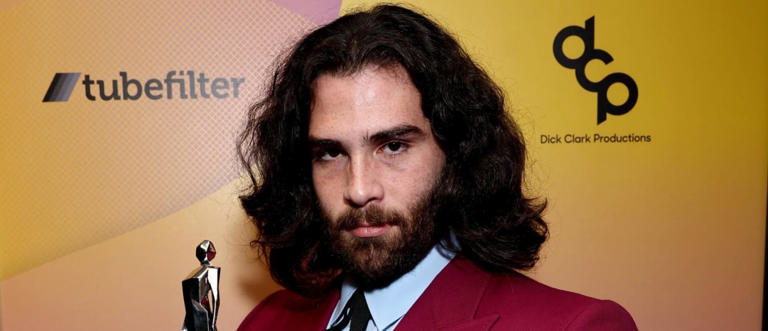
Taken together, these actions show a consistent moderation pattern: when Hasan Piker’s rhetoric veers into slur‑like language or phrasing that can be read as endorsing violence, Twitch intervenes—typically with short but highly visible suspensions.
Conflicts with Other Streamers and YouTubers
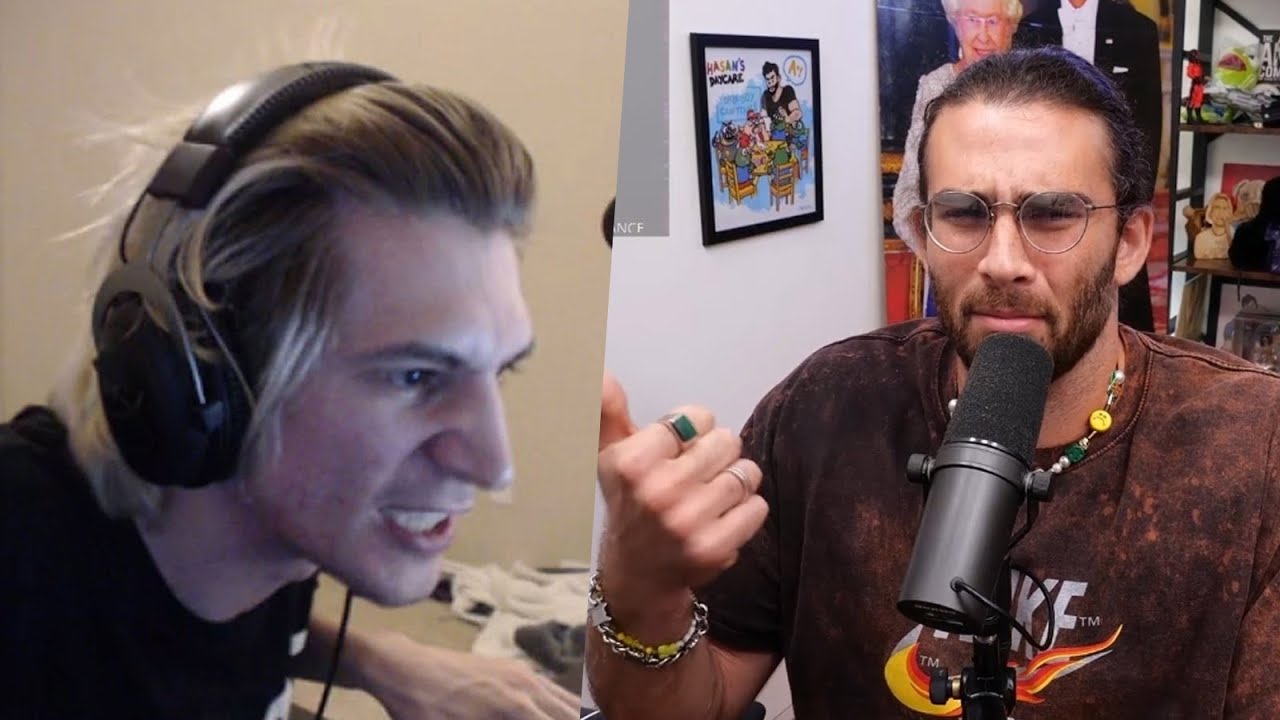
From my perspective, Hasan Piker’s presence in the streaming world has been defined not only by his commentary but also by a string of high-profile clashes. I’ve watched his feud with xQc unfold more than once, but it hit a peak in March 2025, when Hasan’s quick return to Twitch after a short suspension triggered accusations of favoritism. That situation reignited an already tense rivalry, with both sides taking jabs on stream and their communities amplifying the drama.
Я также внимательно следил за его давним конфликтом с Итаном Кляйном. То, что началось с тонких колкостей в социальных сетях, переросло в дебаты в прямом эфире в мае 2025 года, где они сошлись лицом к лицу по таким темам, как отношения Израиля и Палестины, модерация платформ и даже судебные иски против других авторов. Я помню энергетику той перепалки — отчасти идеологическое столкновение, отчасти личная неприязнь, и это привело к тому, что их отношения стали откровенно враждебными.
Разногласия с Destiny стали ещё одной повторяющейся темой. Всякий раз, когда кто-то из них говорит о месте другого в политических трансляциях, это вызывает новую волну комментариев. В 2025 году Destiny высмеяла «историю происхождения» Хасана на Twitch, возродив их давний спор о статусе. А затем появился Адин Росс, который в июле 2025 года назвал сообщество Хасана «террористами» во время трансляции — этот шаг подлил масла в огонь и усугубил раскол между фанатами.
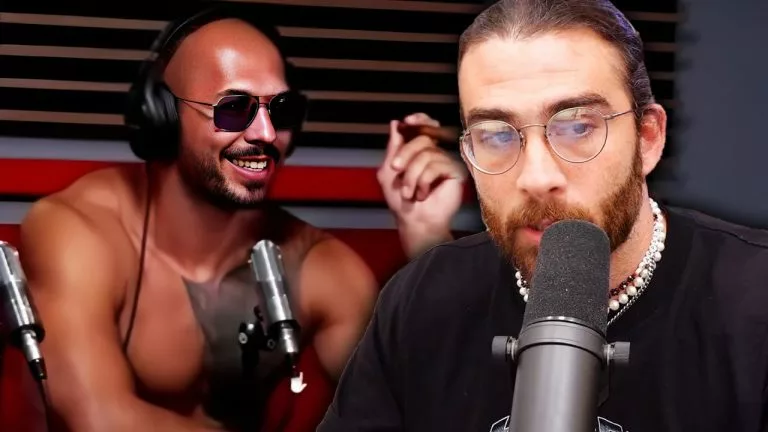
Even outside Twitch, Hasan hasn’t avoided confrontation. His debate with Andrew Tate, though not a long-term feud, became a viral showcase of his combative style. Watching these moments, it’s clear to me that conflict isn’t just a byproduct of his career — it’s one of the engines that keeps his name in circulation and his audience engaged.
Provocative Reactions to Haters Live On Stream
Я видел, как Хасан Пикер превращал ненависть в чистый контент больше раз, чем могу сосчитать, но несколько моментов особенно выделяются. В начале мая 2025 года, после того как в сюжете Fox News его комментарий об Израиле и Палестине подвергся критике, он не стушевался и не занял оборонительную позицию. Вместо этого он вышел в прямой эфир с улыбкой, посмотрел прямо в камеру и сказал: «Поздравляю моих ненавистников… Кажется, меня посадят». Это была отчасти шутка, отчасти вызов — и это превратило его чат в хаос. На мой взгляд, это был типичный Хасан: взять нападение и превратить его в представление, которое одновременно развлекло его поклонников и подкололо его критиков.
Another moment that stuck with me happened right after his Twitch ban in May 2025, which came down over his discussion of a shooting suspect’s manifesto. Most streamers would have kept quiet until things cooled off, but not Hasan. He came back swinging, framing the suspension as an attack on press freedom and openly challenging the platform to rethink its rules. He knew exactly how to turn the ban into a rallying point for his audience, feeding the narrative that he was being targeted for speaking truth to power.
Watching him in these situations, I can’t help but see the strategy. Hasan doesn’t just defend himself; he escalates. He reads out the hate in real time, mocks it, and uses it to keep the spotlight firmly on him. It’s a calculated approach — one that turns controversy into momentum and keeps both his supporters and his detractors talking long after the stream ends.
Когда трансляция превращается в мусорное шоу
Episodes of Profanity, Heated Political Clashes, and Emotional Outbursts
Я достаточно насмотрелся стримов Хасана Пикера, чтобы понять, что нестабильность — это не случайность, а часть опыта. Бывают моменты, когда его дебаты переходят от спокойного политического дискурса к чему-то резкому и взрывному. Я наблюдал, как он выплескивает потоки ненормативной лексики посреди дискуссии — не просто чтобы шокировать, но и чтобы подчеркнуть своё разочарование, когда чувствует, что кто-то нечестен или намеренно упускает суть. Такие моменты обычно возникают во время дискуссий на такие острые темы, как внешняя политика США, неравенство в распределении доходов или израильско-палестинский конфликт.
Some of the most striking examples stick in my mind. I remember a stream where he was visibly on edge, pacing, raising his voice, and gesturing wildly while dismantling a caller’s argument. Another time, after a particularly tense back-and-forth, he laughed in disbelief before launching into a rant that blurred the line between serious commentary and theatrical performance. I’ve even seen him have what I’d call an on-stream emotional breakdown — the kind of unscripted moment that quickly makes its way into highlight reels and meme compilations.
These clips — often labeled as “Hasan Piker meltdown” or “emotional breakdown” — have been shared across YouTube, TikTok, and Twitch, becoming part of his digital footprint. To me, they show two things at once: the genuine passion that fuels his content and the way he leans into those surges of emotion to keep his audience engaged. It’s messy, unpredictable, and at times uncomfortable to watch, but that’s exactly why it works. Hasan thrives in the chaos, and his audience comes back knowing they might see something entirely unplanned — and unforgettable.
Memes and Compilations of His On‑Stream Failures
I’ve tracked how Hasan Piker’s roughest moments get packaged into viral currency. First, whenever he spirals into a heated rant or visible frustration, I see YouTube channels and TikTok editors rush out “meltdown” cuts within hours. The clips usually stitch together him pacing, spiking his voice, and punctuating arguments with profanity—perfectly engineered for short‑form outrage.
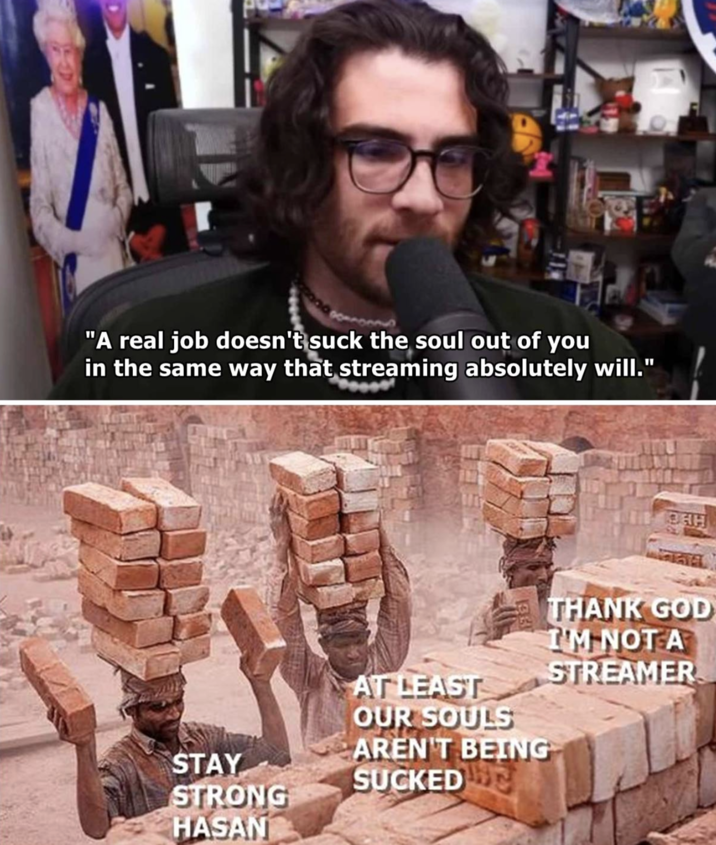
Beyond that, the recurring memes practically write themselves. The 2019 “America deserved 9/11” remark still resurfaces in remix edits and bait thumbnails; it’s the go‑to reference whenever critics want a quick, damaging snapshot. Meanwhile, the 2021 suspension over the word “cracker” became a template for montage videos about platform hypocrisy and Hasan’s language—often framed with freeze‑frames and bold captions to sell the punchline.
Then there’s the lifestyle angle. Editors repeatedly juxtapose his socialist talking points with house‑tour screenshots and car snippets, turning his West Hollywood purchase into a running gag. I’ve also seen the “make the rich pay tax” T‑shirt repurposed as a meme panel—one frame preaching, the next flaunting. Consequently, those contrasts fuel compilation titles like “Hasan Piker EXPOSED,” optimized for clicks and primed for comment‑section pile‑ons.
Finally, even his stream cadence becomes fodder. The habitual “top of the hour ad break” reminder, delivered with clockwork timing, gets clipped and memed as a parody of streamer capitalism. In short, every spike—verbal, emotional, or visual—gets harvested, reframed, and fed back to the algorithm as “Hasan fails,” ensuring his worst minutes live far longer than the streams themselves.
Conclusion
Looking at Hasan Piker’s career, it’s clear to me that his influence comes from more than just political commentary. He thrives on confrontation, uses controversy as fuel, and understands how to turn even his worst moments into momentum. Whether it’s a heated political debate, a Twitch ban, or a meme mocking his lifestyle, he manages to stay in control of the narrative.
As a specialist observing this space, I see a deliberate strategy: embrace the chaos, let the audience witness the unfiltered reactions, and never shy away from polarizing topics. This approach keeps his supporters loyal, his critics engaged, and his name in constant circulation. Hasan Piker isn’t simply reacting to the internet — he’s shaping the conversation, even when the conversation is about his own flaws. That’s what makes him one of the most talked-about figures in streaming today.