Hello, my name is Ethan Cole, and I am a digital media analyst specializing in the culture of online streaming and the business behind internet personalities. Over the past decade, I’ve closely followed how creators across platforms like YouTube, Twitch, and TikTok have transformed from hobbyists into global entrepreneurs, building entire careers around their content. This shift has redefined not only entertainment but also how audiences engage, spend, and support the people they follow.
In this article, I will take a deep dive into the world of monetization — what it means, how it has evolved, and the many strategies creators and businesses now use to generate income. We’ll explore classic models like advertising and affiliate marketing, examine platform-specific opportunities, discuss new frontiers such as AI and Web3, and look at real-world case studies. Finally, I’ll highlight a unique example — GAD.BET — a streaming platform experimenting with interactive monetization that could shape the future of creator income.
What Is Monetization and Why It Matters
Definition and Key Concepts
When I define monetization, I do not reduce it to “making money online.” To me, it is the structured process of converting digital attention into measurable financial outcomes. The critical element here is the bridge between what a creator produces and how an audience, advertiser, or partner translates that output into value. Without this bridge, content remains a personal pursuit; with it, the same work becomes an economic asset.
In digital media, monetization always involves three moving parts: the creator, the audience, and the platform or system that facilitates the exchange. A creator supplies time, expertise, or entertainment. The audience contributes attention, loyalty, or direct payment. The platform establishes rules, provides tools, and takes its own share. Understanding these three roles is essential, because any change in one reshapes the entire revenue model.
I also view monetization as layered. At the surface are direct transactions — ads displayed, subscriptions purchased, products sold. Beneath that lies the more subtle layer: trust, engagement, and cultural influence. These factors are harder to quantify but ultimately determine whether monetization scales or collapses. In other words, the concept is not just about cash flow, but about building systems where creativity consistently generates return.
Content Monetization vs. Business Monetization
When I speak about content monetization, I mean the specific ways a creator earns directly from their work — ads running before a video, a paid subscription to a channel, or a donation during a live stream. It is tied to individual pieces of content and the immediate reaction of an audience. Every view, click, or tip becomes a unit of revenue. This model is flexible but fragile: if the content stops, the income stops too.
Business monetization operates on a wider scale. Here, content is only one component of a larger structure. For example, a podcast can be the entry point, but the real monetization comes from selling courses, books, or events around it. In this case, content functions as marketing, while the actual revenue is generated through products, services, or long-term contracts.
I separate these two concepts because they require different mindsets. Content monetization is tactical — it depends on consistency, trends, and audience engagement in the moment. Business monetization is strategic — it builds systems where income survives even when a creator pauses output. The most successful figures I’ve studied know how to balance both: they capture short-term revenue through content while constructing long-term business models that stabilize their careers.
The Evolution of Monetization Models
From Early Online Ads to Modern Strategies
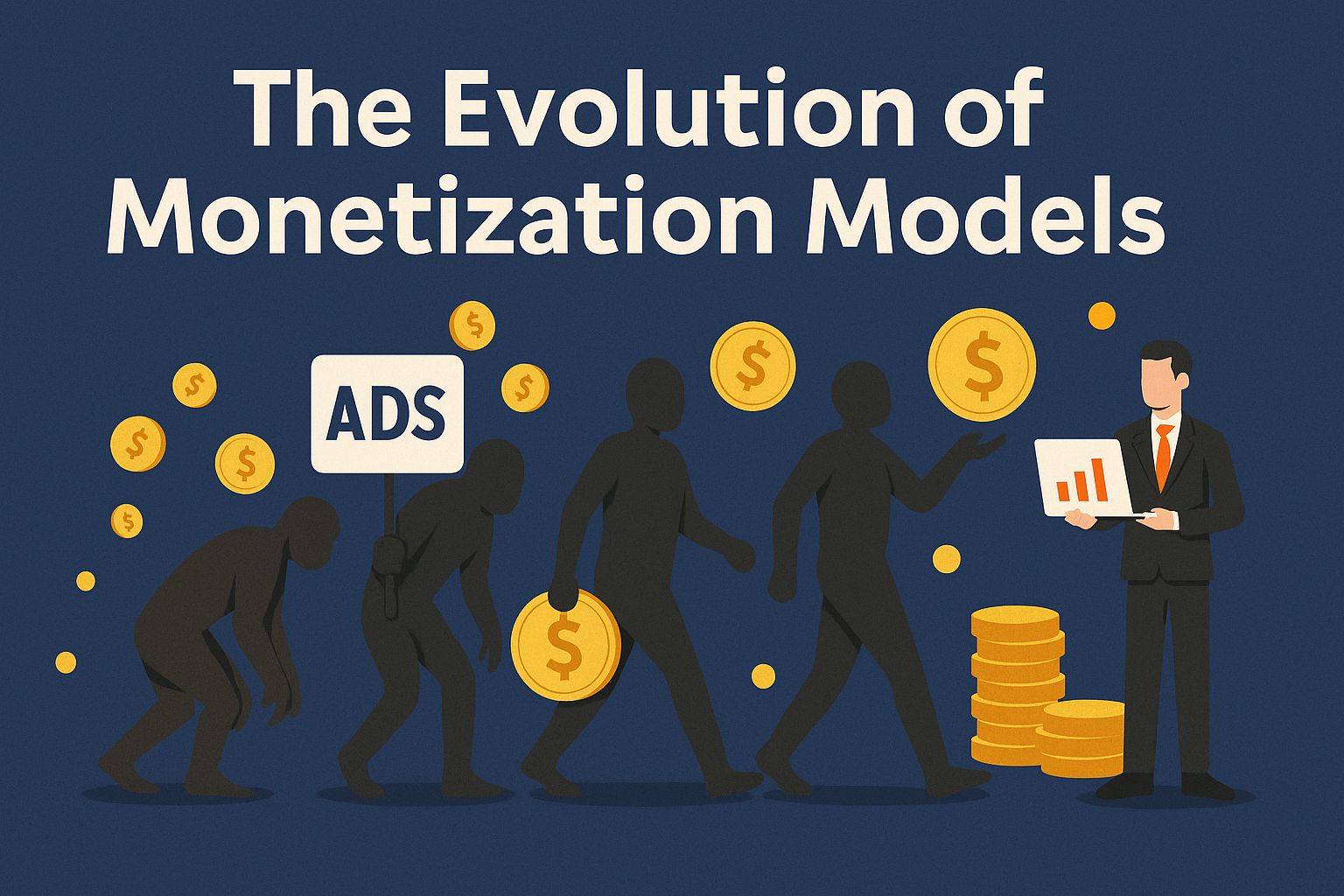
When I look back at the early 2000s, online monetization was almost entirely about banner ads. A website would sell space, advertisers would pay for impressions, and the transaction ended there. It was simple, but also inefficient — banners often went ignored, and value was measured by raw clicks rather than real engagement. At that stage, the internet was borrowing its economic model from print media and television without fully adapting to the new medium.
Over time, strategies became more refined. Contextual advertising introduced relevance — ads that matched the content a person was reading or watching. Later, programmatic buying and real-time bidding automated this process, making it scalable and data-driven. For creators, this meant that monetization was no longer about just placing an ad but about optimizing audience behavior, attention span, and niche targeting.
Today, the strategies are broader and more complex. Instead of being locked into static ad models, creators combine advertising with subscriptions, affiliate deals, sponsorships, and merchandise. The path from banners to integrated multi-channel monetization shows one clear lesson: audiences pay attention when the value exchange feels natural, not forced. That shift is what turned online content from a side project into a global economy.
How Consumer Behavior Shaped Monetization
In my experience, every major change in monetization has been triggered not by platforms but by audiences. People decide what they are willing to tolerate, ignore, or pay for, and the entire industry adjusts. When banner ads became intrusive, users installed ad-blockers, forcing publishers to look for new formats. When audiences grew tired of one-way advertising, brands shifted to influencer deals where the message blended with trusted personalities.
Another turning point was the shift from passive consumption to active participation. Viewers no longer wanted to sit through content; they wanted to support it directly, whether through subscriptions, micro-donations, or merchandise that signaled belonging to a community. That cultural change created the foundation for Patreon, Twitch Bits, YouTube memberships, and even tipping systems on short-form apps.
I’ve also seen how expectations around convenience reshape monetization. Audiences now prefer seamless experiences: a single click to support a streamer, an integrated checkout inside social media, or bundled subscriptions that remove friction. The demand for instant gratification means that platforms must design revenue models invisible in operation but powerful in effect. This is why the most successful monetization strategies are those that align perfectly with consumer behavior rather than trying to fight it.
Main Monetization Strategies in 2025
Advertising Models (CPC, CPM, Programmatic)
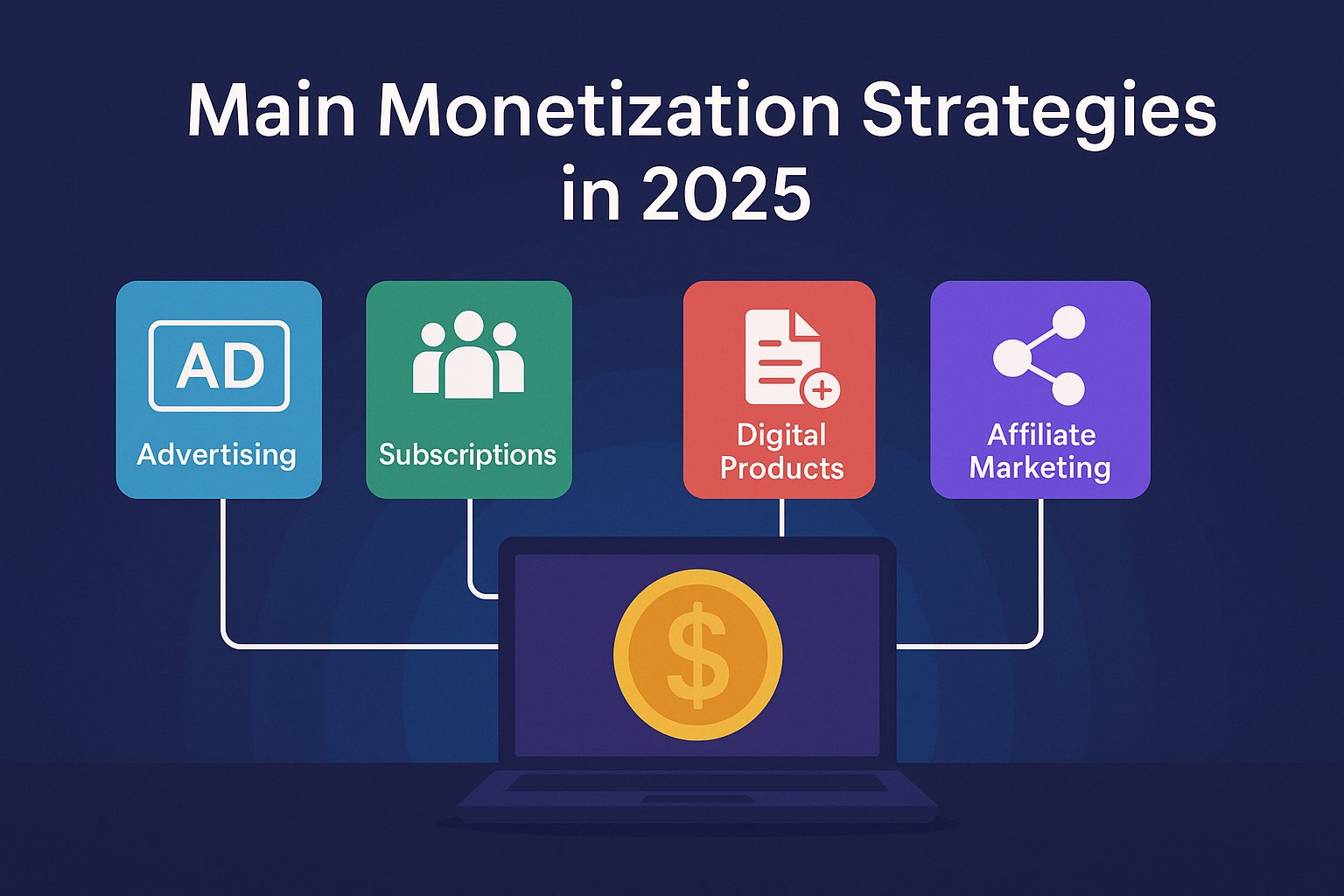
When I evaluate advertising models, I always start with the basic metrics: CPC (cost per click) and CPM (cost per thousand impressions). CPC rewards performance — an advertiser pays only when a user takes action. CPM values visibility — income is tied to the number of times an ad is shown, regardless of interaction. Both models are still relevant, but their effectiveness depends on context. For example, niche blogs often do better with CPC, while high-traffic platforms maximize revenue with CPM.
Over the years, programmatic advertising has redefined this system. Instead of manual deals between publishers and advertisers, algorithms now buy and sell impressions in real time. This means a single piece of content can display different ads to different viewers, based on demographics, interests, or browsing history. For creators, programmatic systems make monetization scalable, but they also add complexity — income can fluctuate based on data accuracy and algorithmic demand.
From my perspective, the real challenge with advertising is not the model itself but the saturation of digital space. Users are exposed to hundreds of ads daily, which lowers attention and effectiveness. That is why creators who rely only on CPC or CPM often face unstable revenue. I see advertising as a foundation, but never as a complete strategy. The smartest creators I’ve studied treat it as one layer in a diversified income structure, not the whole picture.
Affiliate Marketing and Partnerships
When I analyze affiliate marketing, I see it as one of the most efficient ways for a creator to monetize influence without holding inventory or building a product. The model is straightforward: promote someone else’s product or service and earn a commission for every sale or lead. What makes it powerful is scalability — a single recommendation in a video, article, or stream can generate revenue long after the content is published.
Partnerships, however, go a step further. While affiliate programs are open to anyone, partnerships are selective and built on trust between a brand and a creator. In my work, I’ve noticed that partnerships often combine flat fees with performance-based payouts, aligning both short-term and long-term incentives. A creator doesn’t just mention a product; they integrate it into their content, making the monetization seamless and authentic.
The real distinction I make is this: affiliates monetize traffic, while partnerships monetize relationships. Affiliates succeed when they can drive large volumes of clicks. Partnerships succeed when a creator’s audience believes in their judgment and follows their recommendations. In practice, the most sustainable income comes from blending both approaches — using affiliate links for passive revenue while building strategic brand relationships that can grow into long-term collaborations.
Subscriptions, Paywalls, and Memberships
When I think about subscriptions, I see them as the clearest signal of audience commitment. Unlike ads or affiliates, where income depends on volume, a subscription model converts loyalty into predictable monthly revenue. Whether it’s a newsletter, a premium video tier, or exclusive access to a community, the strength of this model lies in stability. I’ve observed that creators who build even a small subscriber base often weather market shifts better than those who rely solely on advertising.
Paywalls operate differently. They restrict access until a payment is made, creating scarcity around content. In my analysis, hard paywalls are effective only when the content has unique value — financial insights, specialized research, or niche expertise. Soft paywalls, like “freemium” models, tend to work better for broad audiences by offering a taste for free while encouraging upgrades.
Memberships expand on both concepts by combining content with identity. A member isn’t just paying for access; they are buying belonging. This could mean badges on a streaming platform, direct interaction with a creator, or early access to products. In practice, I’ve found that memberships succeed when they foster community — the sense that supporting the creator also connects one to a larger group of like-minded people.
Donations, Crowdfunding, and Direct Support
When I evaluate donations, I see them as the purest form of monetization — a direct transfer of value from audience to creator without intermediaries. A tip on a livestream or a one-time contribution through a platform like PayPal is less about the content itself and more about gratitude. From my perspective, donations reveal a key insight: people are willing to pay not only for what they consume but also for the feeling of supporting someone they believe in.
Crowdfunding works differently. Instead of spontaneous gestures, it relies on collective commitment. Platforms like Kickstarter or Indiegogo allow creators to present a vision and secure funding before production begins. I find this model powerful because it flips the risk — the audience shares responsibility for bringing a project to life. The trade-off is accountability: once money is pledged, expectations rise sharply, and failure to deliver can damage long-term trust.
Direct support systems — Patreon, Buy Me a Coffee, or platform-integrated memberships — combine both elements. They give audiences flexible ways to contribute while providing creators recurring income. From my analysis, these systems thrive when creators offer clear value tiers: casual supporters can give small amounts, while dedicated fans can commit more for deeper engagement. What makes this form of monetization unique is its resilience — it’s not tied to algorithms or ad budgets but to personal connection.
E-commerce and Merchandising
When I study e-commerce as a monetization path, I see it as the moment a creator stops being only a publisher and starts acting like a business owner. Selling physical or digital products shifts control: instead of depending on platforms, the creator sets pricing, branding, and distribution. This could be as simple as offering an e-book or as complex as running a full online store with global logistics.
Merchandising is a narrower but equally powerful approach. I’ve observed that audiences often want more than content — they want a tangible symbol of belonging. A hoodie, a mug, or even a limited-edition digital item serves as proof of identity inside a community. In many cases, merchandise doesn’t just generate revenue; it strengthens loyalty by turning viewers into ambassadors who wear or display the brand.
What I find most compelling is how e-commerce and merchandising scale differently from ads or donations. While those models rely on ongoing output, products can generate sales long after their creation. A well-designed course or a timeless piece of merchandise can create passive income that compounds over years. In my analysis, the strongest creators are those who combine content with commerce, building ecosystems where every piece of output supports the other.
Monetization Across Platforms
YouTube (AdSense, SuperChat, Brand Sponsorships)
When I analyze YouTube as a monetization platform, I see three layers of income that define most creator strategies. The first is AdSense, which remains the entry point. Every view generates ad impressions, and creators are paid based on CPM rates that fluctuate by niche and geography. I’ve noticed that while AdSense is reliable, it’s rarely sustainable on its own — unless a channel consistently reaches millions of views, the revenue tends to plateau.
The second layer is SuperChat and channel memberships. This system changed the dynamics of live content by letting viewers pay to highlight their messages during streams. From my perspective, SuperChat is less about the money itself and more about visibility and interaction. People aren’t paying for the text; they’re paying for recognition from both the creator and the community. That emotional exchange is what drives recurring income during live broadcasts.
The third and often most lucrative layer is brand sponsorships. Unlike automated ads, sponsorships are negotiated directly and often tailored to the creator’s niche. A technology channel might promote software tools, while a lifestyle creator could showcase fashion or wellness products. In my analysis, this is where YouTube shifts from a video platform to a business hub. Sponsorships combine scale with trust — brands gain targeted exposure, and creators secure income that isn’t tied to algorithmic volatility. The strongest YouTubers I’ve studied are those who treat these three layers not as separate options but as a unified system.
Twitch (Subscriptions, Bits, Ads)
When I look at Twitch, I see a platform where monetization is built directly into the culture of live interaction. Subscriptions are the backbone — viewers commit to a monthly payment, often in exchange for emotes, badges, or ad-free viewing. From my perspective, a subscription is more than access; it’s a public statement of loyalty. Unlike YouTube memberships, which can feel optional, Twitch subs have become a norm of community support.
Bits are Twitch’s microtransaction system, and I consider them a fascinating form of digital tipping. Instead of donating directly, viewers purchase Bits from Twitch and spend them during streams to cheer on creators. This adds a gamified layer: animations, leaderboards, and recognition drive people to participate repeatedly. The advantage for streamers is immediacy — Bits keep live chat active while creating bursts of income tied to moments of excitement.
Advertising on Twitch is less consistent. Pre-roll and mid-roll ads generate CPM revenue, but they often clash with the real-time flow of streams. From what I’ve seen, many creators treat ads as supplementary rather than primary income. They rely more on subs and Bits to maintain stability. In fact, the strongest Twitch streamers I’ve studied treat ads as background noise while focusing their energy on building a subscription-driven community. For them, the real monetization power lies in the intimacy of live engagement, not in automated ad slots.
TikTok & Short-Form Video
When I analyze TikTok and other short-form platforms, I see a completely different monetization environment compared to YouTube or Twitch. Here, the content lifecycle is short, but the distribution scale is massive. A single 30-second clip can reach millions overnight, yet disappear from relevance within days. This volatility makes monetization both exciting and unstable.
The TikTok Creator Fund was the first structured attempt to reward views, but in my experience it doesn’t generate meaningful income for most creators. Payments are small and fluctuate heavily. That’s why I’ve noticed many creators rely more on brand collaborations than on the fund itself. For advertisers, short-form content delivers fast attention, so they are willing to pay for integrations that feel natural and match the speed of the platform.
Another important layer is TikTok’s live streaming tools — gifts, coins, and badges. Unlike YouTube’s SuperChat, these microtransactions are designed for impulse spending. A viewer can buy digital coins in bulk and distribute them across multiple creators, creating a culture of casual support. I find this model effective because it lowers the barrier: even small contributions add up when multiplied by a huge audience base.
The challenge with short-form monetization is sustainability. Views can spike, but unless creators build funnels — to merch, subscriptions, or off-platform communities — revenue remains unpredictable. From my perspective, TikTok works best as a traffic generator and brand builder, with monetization secured through external channels rather than the platform alone.
Podcasts and Audio Platforms
When I study podcasts as a monetization channel, I always start with their unique strength: intimacy. Unlike video or short clips, podcasts capture attention for long stretches — sometimes an hour or more. That uninterrupted engagement creates ideal conditions for monetization, but the methods differ from visual platforms.
The most common model is sponsorships. In my analysis, podcast ads are powerful because they are often read by the host in their own voice. This blends seamlessly into the content and feels more like a recommendation than a disruption. CPM rates for podcast ads can be higher than video, but the trade-off is scale — only shows with consistent audiences attract strong sponsors.
Another important model is premium feeds. Platforms like Spotify or Patreon allow creators to lock certain episodes or release them early to paying subscribers. I see this as an effective way to monetize loyalty: casual listeners stay on the free version, while committed fans pay for exclusivity.
What makes audio unique is the crossover potential. Many podcasters monetize beyond the show itself by offering live events, courses, or books tied to their content. In practice, the podcast becomes the anchor, while the larger revenue streams develop around it. From my perspective, the key lesson here is that podcasts are less about volume and more about depth — monetization works when the audience feels a long-term relationship with the host.
Blogs and Websites
When I evaluate blogs and websites as monetization tools, I see them as the foundation of digital independence. Unlike social platforms, where rules can shift overnight, owning a site means owning the traffic, the design, and the revenue model. That control allows for experimentation — ads, affiliates, digital products, or even full-scale e-commerce.
Display advertising is usually the first step. Networks like Google AdSense make it simple to earn from page views. But in my analysis, the real strength of blogs is in search-driven traffic. An article that ranks well can generate steady visitors for years, creating a revenue stream that is far more predictable than social algorithms.
Affiliate marketing on blogs also scales well. A well-placed recommendation inside an in-depth article often outperforms banner ads because it aligns with the reader’s intent. If someone lands on a guide about “best fitness apps,” they are already considering a purchase. That alignment between content and conversion is what makes affiliates so effective on websites.
From my perspective, the challenge is consistency. Blogs require long-term investment in writing, SEO, and updates. But the payoff is significant: a site with strong content and authority can diversify income across multiple channels, from courses to sponsored posts. I see blogs not just as revenue sources, but as digital assets that grow in value over time.
Mobile Apps and Games
When I examine mobile apps and games as monetization channels, I see them as ecosystems where revenue is engineered into the user experience from the very first interaction. Unlike blogs or videos, where monetization feels external, apps often integrate income streams directly into design — whether through ads, in-app purchases, or hybrid models.
Interstitial and rewarded ads are the most common entry point. From my perspective, rewarded ads are especially effective because they tie the user’s time to a tangible benefit, like extra lives in a game or premium features unlocked temporarily. Instead of resisting ads, users accept them as part of the experience, which increases both engagement and revenue.
In-app purchases represent the second pillar. Skins, upgrades, and digital currencies may seem optional, but I’ve observed that successful apps design them as extensions of identity and progress. Players pay not only to advance but also to personalize — and that emotional connection drives recurring spending. In this sense, the app is less a product and more a marketplace.
Hybrid models are becoming the standard. Developers blend free-to-play mechanics with optional subscriptions or premium tiers. This combination maximizes reach while creating a revenue floor from committed users. In my analysis, the most resilient apps don’t depend on one stream; they build layered systems where advertising, microtransactions, and subscriptions complement one another. That structure is what separates short-lived trends from sustainable businesses.
Social Media Monetization
Instagram and Facebook Creators
When I analyze Instagram and Facebook, I see platforms that built their monetization models around visibility and influence. On Instagram, the core income stream has always been brand deals. A creator’s ability to monetize depends less on follower count and more on engagement rate — how many people comment, share, or act on a post. From my perspective, brands are paying for credibility inside communities, not just for reach.
Facebook, while often seen as less “trendy,” offers tools that are more structured. Ad breaks in videos, fan subscriptions, and integrated shops allow creators to turn attention into revenue without leaving the platform. I’ve noticed that long-form video on Facebook still commands strong CPM rates, especially in niches like lifestyle, news, and gaming. Unlike Instagram, where deals are often private negotiations, Facebook’s system is more standardized and transparent.
What sets these platforms apart is their integration with commerce. Instagram Shops and Facebook Marketplace allow creators to sell products directly inside the app. This reduces friction: the audience doesn’t need to leave the platform to complete a purchase. In my analysis, this seamless path from inspiration to transaction is one of the reasons social commerce is expanding so quickly.
I also pay attention to algorithmic volatility. Both Instagram and Facebook reward consistency and penalize inactivity, which makes revenue unpredictable for creators who treat them casually. The most successful creators I’ve studied adapt by diversifying: sponsored posts, platform payouts, and direct product sales. In practice, this blend of negotiated and platform-driven monetization is what keeps income stable on Meta’s ecosystem.
X (Twitter) Revenue Sharing
When I look at X, formerly Twitter, I see a late but interesting entry into creator monetization. For years, the platform functioned as a space for influence without direct payouts. That changed with the introduction of ad revenue sharing and subscription features. From my perspective, this shift reflects a larger trend — platforms are competing to keep creators by giving them financial reasons to stay active.
Ad revenue sharing on X works by paying creators a portion of the income generated from ads shown in replies to their posts. In practice, this means that highly engaging or even controversial content tends to earn more. I find this model unique because it monetizes interaction rather than passive impressions. However, it also creates volatility: income spikes around viral posts but can disappear when engagement slows.
Subscriptions on X are positioned as a way to give followers exclusive content or closer access. Unlike Patreon, which exists outside the social feed, X integrates subscriptions directly into the creator’s profile. From what I’ve seen, this lowers the barrier to entry — a follower doesn’t need to switch platforms to support a creator. The trade-off is dependence on X’s internal rules, which can change overnight.
In my analysis, the main challenge on X is stability. The platform rewards bursts of visibility rather than long-term consistency, making income unpredictable for most creators. That’s why the smartest users I’ve studied treat X monetization as an additional layer rather than a primary source — a way to capitalize on peaks of attention while building steadier revenue streams elsewhere.
Patreon, OnlyFans, and Membership Platforms
When I analyze platforms like Patreon and OnlyFans, I see them as the most direct form of monetization because they eliminate advertisers and place the financial relationship entirely between creator and audience. Unlike ad-driven models, income here depends on how much value an individual is willing to assign to ongoing access. From my perspective, this setup gives creators more control, but it also exposes them to the challenge of retention — keeping supporters engaged month after month.
Patreon works best for creators who produce content on a regular schedule. Writers, podcasters, and educators often thrive here because they can package their work into clear tiers: early access, bonus episodes, or community interaction. I’ve found that successful Patreon campaigns are rarely about volume — they’re about loyalty. A few hundred committed patrons can sustain a creator more reliably than thousands of casual viewers elsewhere.
OnlyFans operates differently. It became widely known for adult content, but I’ve observed creators in fitness, music, and lifestyle also using the platform effectively. Its strength lies in intimacy — audiences are paying not just for content but for personal access. That access, whether through private messages or exclusive material, creates a high level of perceived value.
Membership platforms as a category are expanding beyond these two examples. The principle is the same: monetize exclusivity and build community. The key lesson I take from them is that direct support is sustainable only when the creator consistently delivers something unique. Without that differentiation, churn rises quickly. The balance between steady output and genuine connection is what separates fleeting campaigns from lasting income.
New Monetization Frontiers
NFTs, Web3, and Blockchain Economy
When I examine NFTs and Web3 as monetization tools, I see them less as a trend and more as an experimental infrastructure for ownership online. Unlike traditional platforms, where creators rent space from companies, blockchain systems allow them to sell assets that carry permanence and transferability. An NFT is not just a digital file; it is a certificate of authenticity that can be resold, creating secondary markets where creators earn royalties long after the initial sale.
In practice, I’ve observed creators using NFTs in very different ways. Artists mint limited editions, musicians release exclusive tracks, and streamers sell collectible moments from live broadcasts. The unifying factor is scarcity — people pay because the item is unique, provable, and often tied to status within a community. From my perspective, this transforms digital content from something infinitely copyable into something tradable, which changes its economic nature entirely.
Web3 platforms expand this logic further by decentralizing revenue flows. Instead of relying on YouTube or Twitch to set payout rules, creators on blockchain-based platforms can code their own smart contracts. That means income distribution — between collaborators, investors, or even fans — is automatic and transparent. I see this as both an opportunity and a risk: it reduces dependence on corporate gatekeepers, but it also requires audiences to adopt crypto wallets and understand new systems.
The blockchain economy is still young, and I don’t treat it as a stable income source yet. But what I find significant is the principle it introduces — creators owning not just their content but the economy around it. Even if specific platforms fade, that principle is likely to shape how digital monetization evolves over the next decade.
AI-Generated Content as Revenue
When I analyze AI-generated content, I see it as both a shortcut and a new frontier in monetization. Unlike traditional creation, where output is limited by time and skill, AI tools can produce text, images, audio, or video at scale. From my perspective, this doesn’t replace creativity — it amplifies it. The creator’s role shifts from doing all the work to designing prompts, curating results, and packaging them into products that generate income.
I’ve observed multiple revenue paths emerging. Writers use AI to draft articles or newsletters faster, then monetize through ads or subscriptions. Designers create generative art, mint it as NFTs, and sell it on blockchain marketplaces. Even streamers are experimenting with AI avatars or voice filters, creating entirely new identities that can be monetized without a human face. What unites these examples is efficiency — the ability to produce more content in less time, which directly translates into more opportunities to earn.
The challenge I see is differentiation. AI can generate content quickly, but audiences still value authenticity and uniqueness. If everything feels automated, engagement drops, and monetization weakens. That’s why the most effective uses of AI I’ve studied combine automation with personal input — the creator sets the direction, while the AI handles execution. This balance ensures that the final product carries both speed and personality.
For me, the key concept is that AI is not just a tool; it’s becoming part of the monetization model itself. Creators who master it can lower costs, increase output, and open revenue streams that didn’t exist before. Those who ignore it risk falling behind in an environment where efficiency and scale matter more every year.
Microtransactions and Tipping Culture
When I study microtransactions, I view them as the most subtle yet powerful form of monetization. Instead of asking for a large payment, creators and platforms design systems where audiences spend in small, frequent bursts. A digital sticker, an in-game skin, or a highlighted comment might cost less than a cup of coffee, but when multiplied across thousands of users, the revenue becomes significant.
Tipping culture is closely tied to this idea. I’ve seen how platforms integrate seamless payment systems — one-click tips, digital coins, or “stars” — to reduce friction. The psychology here is clear: audiences are more likely to give when the barrier is low and the reward is immediate, whether that’s recognition from the creator or a sense of contribution to the community. From my perspective, tipping is less about the monetary value and more about interaction.
What fascinates me is how microtransactions change the revenue curve. Instead of relying on a few high-value deals, creators spread income across a wide base of casual supporters. This makes monetization more democratic but also more dependent on engagement frequency. If interaction drops, so does income. The strongest examples I’ve studied are those where creators actively design moments for tipping — live Q&As, challenges, or limited-time offers that give audiences reasons to spend spontaneously.
In my analysis, microtransactions and tipping are not side features anymore; they are central to modern monetization. They prove that even small gestures, if repeated at scale, can sustain creators as effectively as traditional advertising or sponsorships.
Key Challenges in Monetization
Ad-Blockers and Declining Ad Revenue
When I evaluate the current state of advertising, the first issue I see is the rise of ad-blockers. Millions of users install them by default, cutting off one of the oldest and most accessible revenue streams for creators. From my perspective, this isn’t just a technical barrier — it’s a cultural statement. People are signaling that they no longer accept intrusive ads as the price of free content.
The impact on revenue is measurable. I’ve seen publishers report losses of up to 30–40% of ad impressions, which directly reduces CPM-based income. For small creators, this difference can decide whether a project is sustainable or not. It also forces a shift: instead of chasing raw traffic, many are now building models that rely less on impressions and more on direct engagement, like subscriptions or sponsorships.
What interests me is how platforms adapt. Some sites try to bypass ad-blockers with detection scripts, but in my analysis, that only frustrates audiences further. More effective solutions are native advertising, sponsored content, or value-based placements that integrate into the experience rather than disrupt it. These methods are harder to block because they blend naturally with the creator’s voice and audience expectations.
From my standpoint, declining ad revenue is not the end of monetization; it is a correction. It pushes creators to treat advertising as one layer in a broader system, not the sole income source. Those who diversify early — combining ads with affiliates, memberships, or microtransactions — are less vulnerable to these shifts and often emerge stronger.
Platform Dependency and Income Risks
When I analyze monetization, I always return to one recurring risk: dependence on platforms. A creator can build income on YouTube, Twitch, or TikTok, but the rules are not theirs to control. Algorithm changes, sudden demonetization, or new policy restrictions can wipe out revenue overnight. I’ve seen cases where channels lost 80% of their income simply because an update redefined what counts as “advertiser-friendly.”
This dependency creates a fragile business model. From my perspective, relying entirely on one platform is similar to running a store on rented property — profitable as long as the landlord agrees, but vulnerable to eviction without notice. It doesn’t matter how large the audience is if access to monetization tools is cut off.
The smartest creators I’ve studied treat platforms as distribution channels, not business foundations. They use YouTube or Twitch to attract attention but move their most loyal audiences to email lists, private communities, or independent websites. That way, even if a platform collapses or changes its terms, the connection to the audience remains intact.
For me, the key lesson is diversification of control. Monetization is not just about multiple income streams; it’s about ownership. The more a creator owns their channels of communication and payment, the less they are exposed to the volatility of platform economics.
Regulatory and Legal Restrictions
When I examine monetization through a legal lens, I see that every revenue stream carries its own regulatory weight. Advertising is subject to disclosure laws — creators must clearly state when content is sponsored. Affiliate links require transparency as well, especially in regions where consumer protection rules are strict. From my perspective, ignoring these requirements isn’t just risky; it can permanently damage credibility with both audiences and partners.
Gambling, financial services, and adult content add an extra layer of complexity. I’ve observed that platforms treat these industries cautiously, often restricting or banning monetization around them. For creators, this means income can disappear not because of performance, but because of policy shifts designed to satisfy regulators. One day a video may be acceptable, the next day it may trigger a demonetization flag.
Taxation is another overlooked factor. In my analysis, many new creators underestimate how quickly income from donations, sponsorships, or digital product sales becomes taxable business revenue. Failing to manage this properly can lead to financial and even legal penalties.
The bigger picture is that monetization doesn’t exist in a vacuum. Governments, platforms, and payment providers all shape what is possible. For me, the key to sustainability is awareness: understanding the legal environment and designing revenue models that comply without stifling creativity. Those who treat regulations as part of strategy, not as an afterthought, are the ones who build careers that last.
How to Build a Personal Monetization Strategy
Choosing the Right Model for Your Niche
When I guide creators on monetization, the first thing I emphasize is alignment between niche and model. Not every revenue stream fits every type of content. A tech reviewer can thrive on affiliate sales of gadgets, but the same approach won’t work for a comedy channel where the audience is there for entertainment, not purchase advice. From my perspective, forcing the wrong model creates friction — audiences sense it and engagement drops.
I’ve seen that educational niches often succeed with subscriptions and courses because audiences already view knowledge as a product worth paying for. Lifestyle and entertainment creators, on the other hand, usually lean on brand deals and merchandising, where personality is as valuable as the content itself. News and commentary channels often do well with memberships and donations, since their audiences value direct support for independent voices.
The real mistake I notice is copying strategies without context. Just because a famous creator makes money from sponsorships doesn’t mean the same will work for a small channel in a different niche. Every audience has a threshold — what they will tolerate, what they will pay for, and how they prefer to engage financially. The best results come when the monetization model feels like a natural extension of the content rather than an interruption.
For me, choosing the right model is less about chasing the highest CPM or commission and more about studying the psychology of the audience. When the revenue mechanism matches what viewers already want to do — learn, belong, or show support — monetization becomes sustainable and long-term.
Diversification and Risk Management
When I think about long-term monetization, diversification is the principle I return to most often. Any single revenue stream — ads, affiliates, or donations — can collapse without warning. I’ve seen creators lose entire incomes overnight because of an algorithm change, a policy update, or a sponsor pulling out. From my perspective, relying on one source is not monetization; it’s gambling with stability.
Diversification means building layers. Ads provide baseline revenue, affiliates add performance-driven income, memberships create predictable monthly support, and merchandise offers scalable growth. Each model has weaknesses, but together they create balance. If ad rates drop, community support softens the impact. If donations slow, product sales can pick up the slack.
Risk management also requires looking beyond revenue types to geography and audience segments. A creator dependent on one market is exposed to regional downturns. I’ve noticed that internationalizing content — subtitles, multi-language communities, or global shipping for products — not only increases reach but also reduces vulnerability.
For me, the lesson is simple: creators who diversify early build resilience. They are less reactive to market shifts and more focused on growth. Monetization isn’t just about maximizing income; it’s about ensuring that income survives the shocks every platform and industry eventually delivers.
Scaling from Side Hustle to Full-Time Income
When I look at creators who turn monetization into a career, the transition usually starts small — a few dollars from ads, a handful of affiliate sales, or early donations from loyal viewers. At this stage, income feels inconsistent, almost like a bonus. From my perspective, the key to scaling is not chasing quick spikes but building predictable systems that can grow steadily.
The first step is tracking. I’ve seen too many creators treat revenue casually, without analyzing what sources perform best. Once you know which streams are reliable, you can double down — posting more content in the format that drives subs, or optimizing affiliate campaigns that already convert. Scaling begins with clarity, not expansion for its own sake.
The next step is reinvestment. Equipment upgrades, professional editing, or targeted ads often turn a hobby into a business. I consider reinvestment a turning point: it signals that a creator is no longer testing but deliberately building. The payoff is visible in audience perception — higher quality content attracts higher-value sponsors and more serious supporters.
Finally, scaling requires mental adjustment. A side hustle tolerates inconsistency; a full-time career cannot. That means planning content calendars, building backup income layers, and treating monetization as a structured business. In my analysis, the difference between someone earning part-time and someone sustaining full-time income isn’t luck — it’s the decision to manage revenue with the same discipline as any other enterprise.
Case Studies of Successful Monetization
YouTube Creator Journey
When I study YouTube creators who have built sustainable income, I notice that their journey almost always begins with AdSense. Early on, every view feels like progress because it proves that content can generate money, even if the amounts are small. From my perspective, this first stage is less about revenue and more about validation — it confirms that creativity has economic value.
The second stage usually comes when a creator recognizes the limitations of ads. CPMs vary, seasonality affects payouts, and reliance on volume creates pressure to chase trends. I’ve seen creators shift at this point toward sponsorships, affiliate links, or product tie-ins. The audience is no longer just a traffic source; it becomes a community whose trust can be converted into deeper revenue streams.
The most successful journeys I’ve analyzed show a third stage: business integration. A creator launches merchandise, courses, or even their own brand, turning YouTube from a single income channel into a marketing engine. At this stage, monetization stops being reactive and becomes proactive — the creator isn’t waiting for YouTube payouts, they are using the platform to drive a broader business model.
For me, the YouTube creator journey illustrates the evolution of monetization itself. It moves from passive income based on views, to active strategies built on trust, and finally to full ownership of a business ecosystem. Those who master each step create careers that last beyond algorithm changes or platform trends.
Twitch Streamer with Multi-Income Sources
When I analyze Twitch streamers who succeed long-term, the pattern I see is diversification from day one. Most start with subscriptions — it’s the clearest measure of community support. A loyal group of subs provides baseline income that covers essentials, but on its own, it rarely scales enough to sustain a full-time career.
The second layer is Bits and donations. I’ve observed how these microtransactions transform live streams into interactive events. Viewers aren’t just watching; they’re influencing the atmosphere in real time. From my perspective, this direct participation is what drives repeat contributions. Each cheer or donation creates a moment that strengthens the bond between streamer and audience.
Advertising is present but rarely dominant. Streamers who rely heavily on ads often struggle because mid-rolls interrupt the flow of live content. The smarter ones treat ads as background income while focusing on sponsorships. Brands value Twitch creators not only for reach but for authenticity — a recommendation delivered during a natural stream feels far more persuasive than a traditional ad.
The final layer I often see is off-platform monetization: merchandise, Patreon support, or even exclusive content on other services. This step reduces dependency on Twitch alone and protects income from sudden policy shifts. From my perspective, the Twitch streamers who thrive are not those who play the most hours but those who treat streaming as a hub, building multiple income paths that flow through and beyond the platform.
Independent Writer on Substack
When I examine independent writers on Substack, I see a monetization path built on trust rather than scale. Unlike YouTube or Twitch, where success often depends on massive audiences, Substack rewards depth. A few hundred paying subscribers can generate steady income if the content delivers consistent value. From my perspective, this makes writing one of the most accessible ways to build a direct reader-to-creator economy.
The model is simple: free posts attract new readers, while premium newsletters, essays, or analysis are placed behind a subscription paywall. What I’ve observed is that the best writers don’t just sell information — they sell perspective. Readers are paying for a voice they trust to interpret events, trends, or niche topics in a way no algorithm can replace.
Another element I find important is community. Substack integrates comments and discussion threads, allowing subscribers to interact not just with the writer but with one another. This sense of belonging increases retention, which is crucial for recurring revenue. In my analysis, writers who nurture community alongside content see far lower churn rates than those who publish in isolation.
The strongest Substack journeys I’ve studied follow a clear arc: build credibility with free content, convert a fraction of readers into subscribers, and expand gradually into books, podcasts, or speaking engagements. For me, this path demonstrates that monetization doesn’t always require scale. With the right positioning, independence and audience loyalty can be enough to sustain a full-time creative career.
The Future of Monetization
Predictions for 2025–2030
When I look ahead at monetization trends, I don’t see a single model dominating. Instead, I see convergence — creators blending ads, subscriptions, microtransactions, and commerce into hybrid systems. From my perspective, the next five years will not be about inventing new revenue streams, but about refining how multiple models work together seamlessly.
I expect direct audience support to grow stronger. Donations, memberships, and tipping are no longer side features; they are becoming core monetization channels across nearly every platform. The psychology is clear: people want to support individuals they trust more than faceless institutions. By 2030, I believe direct support will rival or even surpass traditional advertising in importance for independent creators.
At the same time, automation will expand. AI will lower production costs and increase content supply, which means competition for attention will intensify. In my analysis, creators who survive this shift will be those who pair efficiency with authenticity — using AI to scale output while keeping a personal voice that audiences connect with.
Finally, I expect monetization to move further into decentralized ecosystems. Blockchain-based ownership, tokenized communities, and revenue-sharing models will give creators more control. Adoption will be uneven, but I see a long-term shift toward creators owning both their content and the economic systems around it. For me, the next era of monetization will be defined not by platforms dictating terms, but by creators designing economies that audiences choose to join.
VR, AR, and Immersive Advertising
When I analyze the role of VR and AR in monetization, I see them as the next stage of experiential revenue. Traditional ads interrupt; immersive ads integrate. In virtual and augmented environments, monetization doesn’t appear as a banner or a pre-roll video — it becomes part of the world itself. From my perspective, this shift makes advertising feel less like an external demand for attention and more like an extension of the experience.
In VR, I’ve observed brands testing interactive product placements: a user in a game might pick up a virtual drink that exists in real life, or explore a branded environment that doubles as an advertisement. Unlike passive impressions, these encounters are participatory. The act of engagement itself is the monetized moment. For creators, this opens opportunities to design sponsored experiences rather than simply insert ads.
AR brings the same logic into the physical world. I see influencers using AR filters, branded effects, or location-based campaigns that blend content with commerce. The key advantage here is context — a product recommendation isn’t just shown, it’s demonstrated in a user’s own environment. That level of personalization has the potential to raise conversion rates far beyond traditional methods.
From my perspective, VR and AR advertising won’t replace existing models, but they will add a premium layer. Brands will pay more for experiences that immerse audiences deeply, while creators who master these tools will command higher value. By 2030, I believe immersive monetization will move from experiment to expectation in industries like gaming, fashion, and live events.
Decentralized Platforms and Creator-Owned Ecosystems
When I think about the future of monetization, decentralized platforms stand out as one of the most disruptive forces. Unlike YouTube or Twitch, where creators operate under company rules, decentralized systems allow ownership of both content and revenue flow. From my perspective, this is more than a technical shift — it changes the power balance between creators and platforms.
On blockchain-based platforms, smart contracts can handle payments automatically. I’ve seen models where revenue is split instantly between creators, collaborators, and even early supporters who helped fund the project. This transparency removes the delays and disputes that often occur in centralized systems. For creators, it means income that is both predictable and verifiable.
Another development I find important is the rise of creator-owned ecosystems. Instead of building audiences on rented platforms, some creators are launching their own apps, private communities, or token-based memberships. In these spaces, they set the rules: what content is premium, how contributions are rewarded, and how community members can participate in growth.
I don’t believe decentralized models will replace existing platforms completely — mainstream audiences often prefer convenience over autonomy. But I do see a gradual shift where serious creators use decentralized tools to secure their core income while still leveraging big platforms for visibility. For me, the long-term trajectory is clear: the more control creators gain over distribution and payment, the more stable and independent their monetization becomes.
Monetization on GAD.BET – A New Era of Streaming Income
How GAD.BET Differs from Traditional Platforms
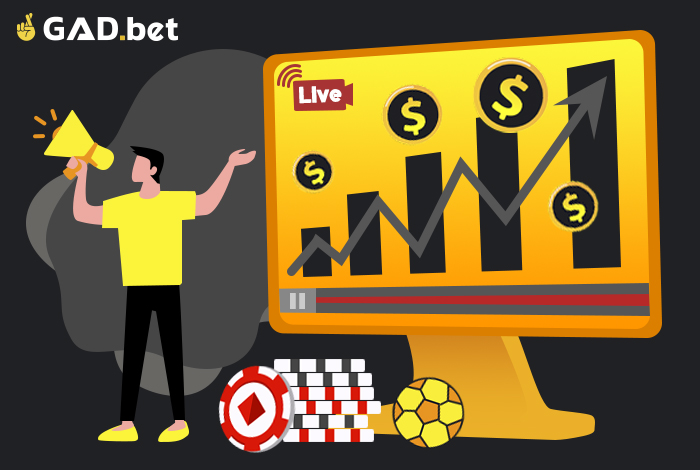
When I compare GAD.BET to platforms like YouTube, Twitch, or Kick, the first difference I notice is its integration of interactivity and monetization. On traditional platforms, revenue flows through ads, subs, or donations, and the audience remains mostly passive. GAD.BET flips this model by tying monetization directly to participation — betting, challenges, and interactive outcomes become part of the stream itself. From my perspective, this creates a dual incentive: viewers are entertained while also engaging financially in real time.
Another distinction is payout structure. On most platforms, creators wait weeks before receiving their income, with funds filtered through ad networks or platform-specific policies. GAD.BET emphasizes instant payouts tied to interactions. I see this as more than convenience; it changes the psychology of both creators and viewers. Streamers can treat streaming as a reliable cashflow activity rather than waiting on delayed settlements, and viewers feel their contributions are immediately part of the experience.
Culturally, GAD.BET positions itself less as a broadcasting stage and more as a gamified arena. On Twitch or YouTube, content is central and money flows around it. On GAD.BET, the money mechanics are embedded in the content itself. That integration shifts how creators design streams — not just to entertain, but to structure events where participation drives the economy.
From my analysis, this separation from tradition is significant. GAD.BET doesn’t compete on volume of creators or sheer traffic; it competes on a new definition of value exchange between audience and streamer. For creators willing to experiment, that difference can open income paths unavailable on conventional platforms.
Interactive Revenue Models and Instant Payouts
When I analyze GAD.BET’s revenue design, the first thing that stands out is how deeply interactivity is tied to income. Unlike Twitch, where donations or Bits are optional add-ons, here the core model encourages viewers to place bets, join challenges, or participate in prediction-based mechanics. From my perspective, this creates a monetization loop where entertainment and financial engagement are inseparable.
The strength of this approach lies in variety. I’ve seen streamers use GAD.BET not just to broadcast but to structure events around outcomes — who wins a match, how a challenge unfolds, or even spontaneous mini-games triggered by the audience. Each interaction generates revenue, not only for the platform but directly for the creator. Compared to static ad placements, this dynamic system transforms passive viewing into active participation.
Instant payouts are another defining feature. On most traditional platforms, creators face waiting periods before funds are released. GAD.BET minimizes this gap, transferring earnings as soon as interactions occur. I view this as more than a technical upgrade; it changes behavior. Streamers can reinvest earnings immediately — upgrading equipment, funding content ideas, or simply treating streaming as a daily source of liquidity. Audiences also perceive greater transparency, knowing their contributions flow directly without delay.
In my analysis, this mix of interactivity and instant payment introduces a new rhythm to streaming monetization. It rewards spontaneity, keeps audiences engaged, and allows creators to operate with financial agility that older platforms can’t match.
Opportunities for Streamers and Viewers
When I evaluate GAD.BET, I don’t just look at what it offers creators — I also consider how it reshapes the audience’s role. On most platforms, viewers support streamers through subs, donations, or ad views. On GAD.BET, they step into a more active position. By placing bets, joining challenges, or backing outcomes, viewers become participants whose choices influence both the entertainment and the economy around it. From my perspective, this is a fundamental shift: the audience is no longer just a source of revenue, but a stakeholder in the content experience.
For streamers, the opportunities extend beyond traditional income. They can design interactive formats — prediction games, skill-based contests, or community-driven events — that would not translate the same way on Twitch or YouTube. I’ve seen how this flexibility encourages experimentation. Instead of competing only on production quality or follower count, creators on GAD.BET compete on creativity in designing monetizable interactions.
Another important factor is retention. Viewers who invest in outcomes are less likely to treat streams as background noise. The financial involvement creates emotional investment, which keeps audiences engaged longer and returning more frequently. In my analysis, this translates into stronger communities where loyalty is built on both entertainment value and shared participation.
From my standpoint, the real opportunity is in the alignment of incentives. Streamers earn more when audiences engage; audiences enjoy more when their engagement carries real weight. That balance is what makes GAD.BET stand apart, offering a model where monetization and interaction grow together instead of existing as separate layers.
Conclusion
When I step back and look at the landscape of monetization, one thing is clear: there is no single formula that guarantees success. The past two decades have shown how quickly models evolve — from banner ads to memberships, from one-time sponsorships to entire ecosystems built around creators. What remains constant is the principle of exchange: audiences reward creators they trust, and creators who understand their audience can build sustainable income around that relationship.
For me, the future lies in flexibility. Relying on one stream is fragile; blending multiple models is what turns creative work into a career. Ads, affiliates, donations, subscriptions, and commerce each play their role, but their power multiplies when combined. At the same time, creators must accept that the rules are shifting — audiences demand more authenticity, regulators tighten oversight, and platforms experiment with new ways to keep people engaged.
In this shifting environment, I pay attention to platforms that rethink the relationship between viewer and creator. One example I find especially interesting is GAD.BET. By embedding interactivity and instant payouts into streaming, it reflects where monetization may be heading: away from passive consumption and toward active participation. I don’t see it as a replacement for traditional platforms, but as a signal of what’s possible when monetization is designed around engagement rather than just exposure. For now, it stands as a promising case study in how the next generation of creators might diversify income and build stronger ties with their audiences.
Monetization — FAQ
Practical, creator-focused answers based on the guide above.